PM Reaffirms Pakistan Support for UN Multilateralism
Prime Minister Shehbaz Sharif reaffirmed Pakistan's support for UN multilateralism during talks with secretary-general candidate Olara Otunnu.
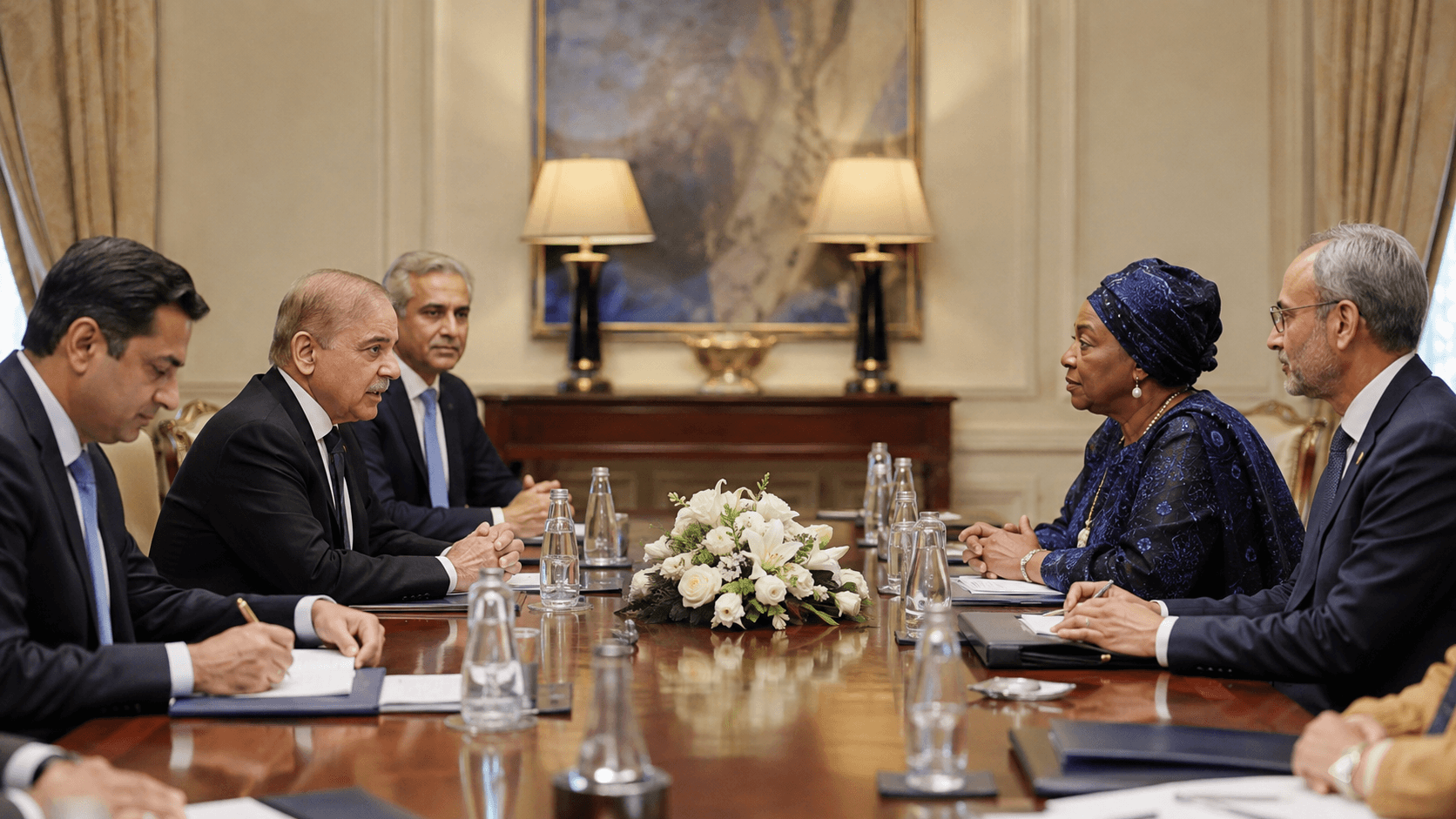
Image credit: AI-generated image / Novexa News
Prime Minister Shehbaz Sharif has reaffirmed Pakistan's support for multilateralism and the role of the United Nations during a meeting with Ambassador Olara Otunnu, Uganda's candidate for the post of UN secretary-general.
The meeting took place at the Prime Minister's House in Islamabad on Friday. Otunnu was accompanied by Ruhakana Rugunda, special envoy of the president of Uganda and former prime minister of Uganda. Deputy Prime Minister and Foreign Minister Ishaq Dar, Special Assistant to the Prime Minister Tariq Fatemi and Foreign Secretary Amna Baloch also attended the talks.
What Shehbaz told Otunnu
Shehbaz said Pakistan would continue to support the United Nations and the multilateral system at a time when global institutions are being tested by conflict, economic pressure and political divisions.
According to the official account of the meeting, the prime minister reiterated Pakistan's commitment to the purposes and principles of the UN Charter. He also underlined the need for respect for international law and international treaties, framing those rules as essential to stability between states.
Pakistan's message on global order
The meeting gave Islamabad a chance to restate a familiar foreign-policy position: that major international challenges should be handled through dialogue, law and collective institutions rather than unilateral pressure.
Pakistan has often linked this position to questions of peace and security, development, climate vulnerability and human rights. In this meeting, Shehbaz again presented multilateralism as a practical necessity rather than a diplomatic slogan.
The three pillars of the UN
Shehbaz expressed hope that the next UN secretary-general would keep a balanced focus on the organization's three core pillars: peace and security, development and human rights.
That point matters because Pakistan argues that these areas are connected. Conflicts can weaken economies, poverty can deepen instability, and human-rights crises can make peace harder to sustain. Islamabad's message was that the UN must treat these concerns together rather than as separate files.
Who is Olara Otunnu
Olara Otunnu is a Ugandan diplomat and former senior UN official. The United Nations lists him among the candidates nominated for the next secretary-general, with Uganda submitting his nomination in July 2026.
His candidacy has included participation in the UN's public selection process, including an interactive dialogue with member states. That process is meant to make the appointment of the next secretary-general more transparent and inclusive than in earlier eras.
Otunnu thanks Pakistan
During the Islamabad meeting, Otunnu thanked Pakistan for its long-standing contribution to the multilateral system. He also appreciated Pakistan's role in the UN's work on peace and security, development and human rights.
Pakistan has a long record in UN peacekeeping and frequently points to that contribution as evidence of its commitment to collective security. Otunnu's remarks recognized that wider role while also keeping the focus on future UN priorities.
Why the meeting matters
The meeting came as the UN secretary-general selection process is already underway. The UN says candidates are being formally submitted by member states, with public materials such as vision statements, curricula vitae and campaign-financing disclosures made available as part of the process.
For Pakistan, engaging with a declared candidate allows Islamabad to put its priorities directly on the table: stronger multilateral cooperation, respect for international law and a UN system that remains relevant to developing countries as well as major powers.
It also reflects how middle and developing states try to influence the conversation before a final appointment is made. The secretary-general cannot solve crises alone, but the office can shape diplomatic urgency, humanitarian priorities and the tone of global debate when major powers disagree.
Pakistan's emphasis on the charter, treaties and international law fits that broader concern. Islamabad wants the next UN leadership to protect the credibility of shared rules at a time when wars, debt stress, climate disasters and political polarization are placing heavy pressure on the international system.
The discussion was not presented as an endorsement of one candidate over the whole field. Its significance lies in the diplomatic signal. Pakistan wants the next phase of UN leadership to keep peace, development and rights connected, while protecting the authority of the charter-based international order.
Source links
Comments
No approved comments yet.