Pakistan Urges Diplomacy After UN Iran Sanctions Panel Veto
Pakistan urges renewed diplomacy after Russia and China veto a US draft extending the UN expert panel monitoring Iran sanctions.
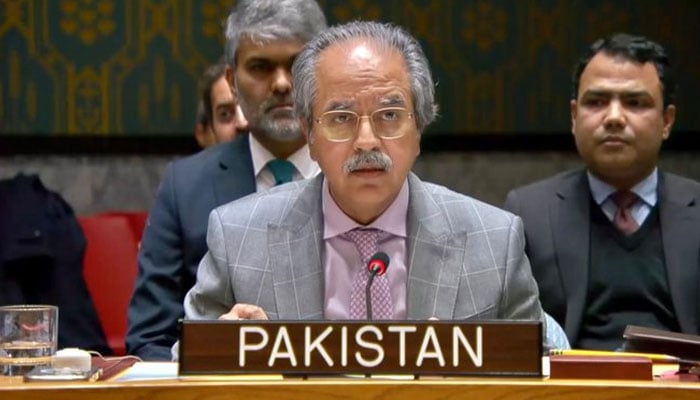
Image credit: The News International / file photograph
UNITED NATIONS, September 19, 2026: Pakistan has renewed its call for diplomacy over Iran's nuclear programme after abstaining on a United States-sponsored Security Council resolution that would have extended the mandate of the expert panel monitoring UN sanctions on Tehran.
Russia and China vetoed the draft on Thursday. Eleven of the Security Council's 15 members voted in favour, while Pakistan and Somalia abstained. Because both opposing votes came from permanent council members, the proposal was not adopted despite receiving the required numerical majority.
The draft would have renewed the Panel of Experts' mandate for one year, through September 2027. The current mandate expires on September 26, according to the UN Security Council's sanctions committee.
Pakistan's Permanent Representative to the United Nations, Ambassador Asim Iftikhar Ahmad, said the Iranian nuclear issue had become increasingly complicated and that the council had moved away from the cooperative approach associated with the adoption of Resolution 2231 in 2015.
He told the council that diplomacy and dialogue should remain the guiding principles for resolving the outstanding issues. Pakistan also called for the rights, obligations and responsibilities of all parties to be respected as part of a peaceful settlement.
What the Rejected Resolution Covered
The expert panel was established under Security Council Resolution 1929 to assist the committee overseeing sanctions related to Iran's nuclear and ballistic-missile programmes. Its mandate includes gathering and analysing information about implementation, examining reported non-compliance and recommending steps to improve enforcement.
The US draft sought to preserve that independent monitoring arrangement. It also called for regular reporting and recommendations about sanctions-related measures. The Associated Press reported that the panel had not become operational because proposed experts were never approved.
The veto does not itself remove the sanctions that Western governments say were restored in September 2025. It instead prevents the proposed one-year extension of the expert panel that would monitor their implementation. The result is therefore a dispute over oversight as well as another sign of the council's deeper disagreement about the legal status of the sanctions regime.
US representatives argued that losing the panel would create a gap in impartial reporting on possible sanctions violations. Russia said the Western-backed restoration of sanctions, commonly described as the snapback process, lacked a legal basis and maintained that the extension proposal was therefore flawed. China also opposed the draft.
Pakistan Backs an IAEA Role
Pakistan's statement placed renewed emphasis on the International Atomic Energy Agency. Ahmad said the IAEA should be able to carry out its safeguards responsibilities independently and without political interference.
That distinction matters because the IAEA's technical work and the Security Council sanctions panel have different roles. The nuclear watchdog conducts safeguards and verification activities, while the panel supports the council committee by examining implementation of sanctions measures and reporting alleged violations.
Pakistan has not endorsed the competing legal positions advanced by the Western permanent members on one side and Russia and China on the other. Its abstention instead reflected Islamabad's position that confrontation inside the council is unlikely to create the conditions needed for a negotiated solution.
The vote was 11 in favour, two against and two abstentions, according to Dawn's report on Pakistan's explanation of vote. France, Britain and the United States supported the extension, while Russia and China used their vetoes.
Call to Return to the Negotiating Table
Pakistan also urged the parties to implement their commitments under the Islamabad Memorandum of Understanding and return to negotiations. The agreement emerged from Pakistan- and Qatar-supported efforts to create a framework for talks between Iran and the United States.
In June, the Foreign Office said the framework was intended to advance technical discussions and support a durable diplomatic process. Pakistan has continued to present the memorandum as a route back to negotiations as regional tensions have increased.
The immediate consequence of Thursday's vote is that the expert panel's mandate is set to lapse unless the Security Council reaches a new agreement before September 26. The sanctions committee and the wider disagreement over Iran's nuclear programme will remain, but the council will have less independent monitoring capacity if no replacement arrangement is approved.
Pakistan's message was that this institutional dispute should not displace the broader objective of a negotiated settlement. Islamabad said renewed engagement, an independent technical role for the IAEA and implementation of existing diplomatic commitments offered a more sustainable path than further confrontation.
Source links
Comments
No approved comments yet.