Pakistan Says 37 Militants Killed in KP and Afghanistan Border Operations
Pakistan says 37 militants were killed in KP ground operations and Afghanistan airstrikes, while the UN confirms civilian casualties in Kunar.
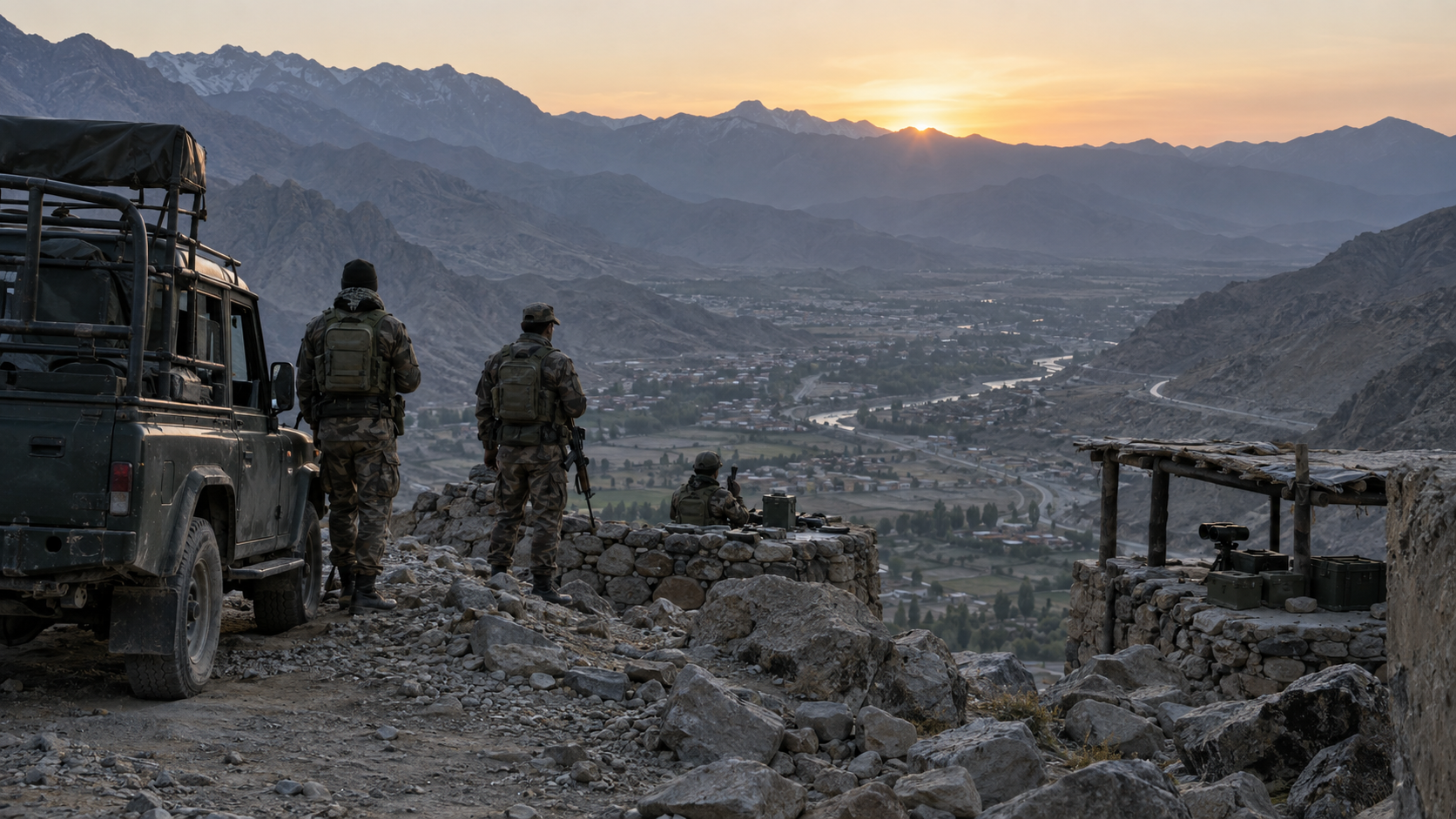
Image credit: AI-generated editorial illustration by OpenAI
Pakistan says its security forces killed 37 militants in ground operations in Khyber Pakhtunkhwa and airstrikes in eastern Afghanistan, while Afghan authorities and the United Nations reported civilian casualties from the cross-border strikes.
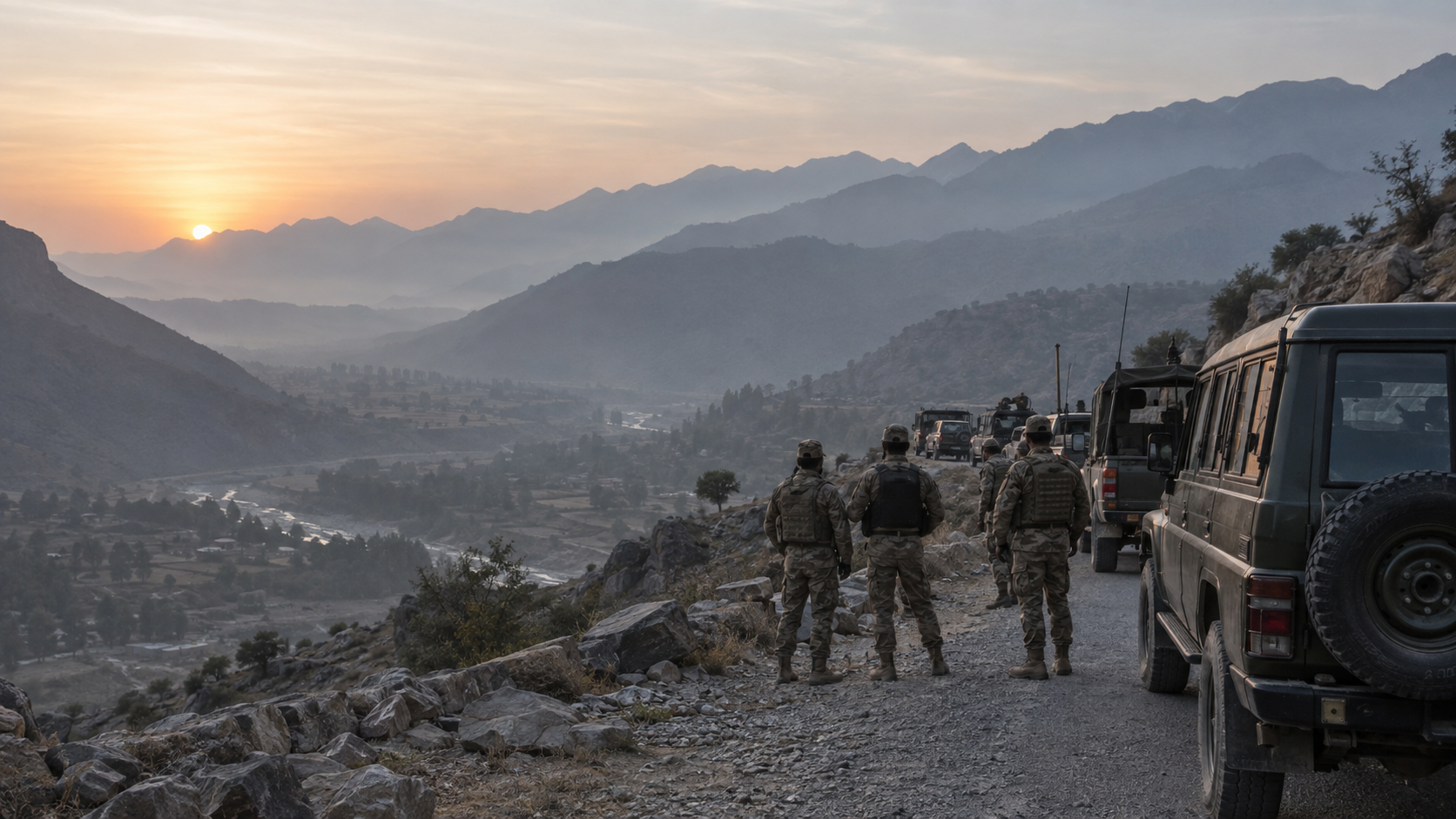
The figures combine two parts of the operation. Pakistan's Ministry of Information said nine militants were killed during an intelligence-based ground action in the Kohat, Hangu and Thall areas on September 20. It said airstrikes then destroyed three sites across the border and killed 28 more people described by Islamabad as militants.
The Pakistani account said one target was a training facility for suicide bombers and that weapons and ammunition were destroyed. Those claims could not be independently verified from the sites.
The Associated Press reported that Afghan officials said civilians were among the dead. The United Nations Assistance Mission in Afghanistan said it had confirmed at least three civilians, including a man, a woman and a girl, were killed and four people were injured in apparent airstrikes in Kunar province.
Competing casualty accounts
Pakistan described the cross-border targets as hideouts used by the Tehreek-i-Taliban Pakistan and affiliated groups. The state uses the term "Fitna al-Khawarij" for the TTP and says fighters plan attacks from Afghan territory.
Afghanistan's Taliban government condemned the strikes and disputed Pakistan's account. Kabul has repeatedly denied allowing Afghan soil to be used for attacks on neighbouring countries.
Neither the Pakistani militant toll nor the complete Afghan civilian toll had been independently reconciled. In remote border areas, access restrictions, damaged communications and the competing interests of the governments often make rapid verification difficult.
Dawn reported the Information Ministry's description of "calibrated" strikes and its claim that precautions were taken to avoid civilian harm. Under international humanitarian law, parties carrying out attacks must distinguish military targets from civilians and take feasible precautions, regardless of how the target is described publicly.
Response to attacks in KP
The operations followed deadly attacks on Pakistani security forces and police. Six security personnel, including Captain Abuzar Farooq and Lieutenant Sheraz Babar, were killed in a clash in Hangu in which the military said eight militants also died.
Days earlier, armed attackers struck the old Police Lines compound in Kohat. The attack began with a vehicle bomb near a mosque and developed into a prolonged firefight. Initial reporting put the toll at 21, while later local accounts said 23 police officers and civilians were killed.
Pakistani officials blamed the Kohat attack on militants allegedly based in Afghanistan. The ministry said protecting Pakistani citizens remained the government's highest priority and that counterterrorism operations would continue.
The ground and air actions were linked to the broader Azm-i-Istehkam framework and a campaign the government calls Ghazab lil-Haq. Officials describe the approach as coordinated pressure on militant networks, their leadership and logistical facilities.
Renewed Pakistan-Afghanistan tension
Cross-border strikes risk widening the crisis beyond counterterrorism. Pakistan and Afghanistan have previously exchanged fire after similar operations, while Qatar, Türkiye and other regional states have tried to mediate ceasefires and reduce escalation.
Islamabad argues that repeated attacks leave it with a duty to act against safe havens when Kabul does not. Afghanistan responds that strikes violate its sovereignty and harm civilians. Those positions create a cycle in which every militant attack can lead to military action, retaliation and further diplomatic breakdown.
The dispute also affects legal crossings, trade and families living on both sides of the frontier. Border closures can interrupt food supplies, medical travel and commercial transport long before political leaders reach an agreement.
International concern is likely to focus on two questions: whether the people Pakistan targeted were combatants involved in attacks, and whether civilian casualties were adequately investigated. Transparent evidence and access for independent monitors would help resolve competing claims, but neither side has consistently provided such access.
Pakistan's announced total of 37 is therefore an official figure, not an independently verified casualty count. The confirmed UN report of civilian deaths adds a separate obligation for investigation and accountability.
The immediate military operation may have ended, but its consequences are still developing. Preventing another round of border fighting will require security assurances, credible action against armed groups and a channel through which both governments can investigate incidents without relying solely on public accusations.
Source links
Comments
No approved comments yet.