Iran-US Confrontation Deepens Around Gulf Shipping
The confrontation between Iran and the United States has widened across military bases, oil tankers and Gulf shipping routes, raising the risk that a regional crisis could disrupt one of the world's most important…
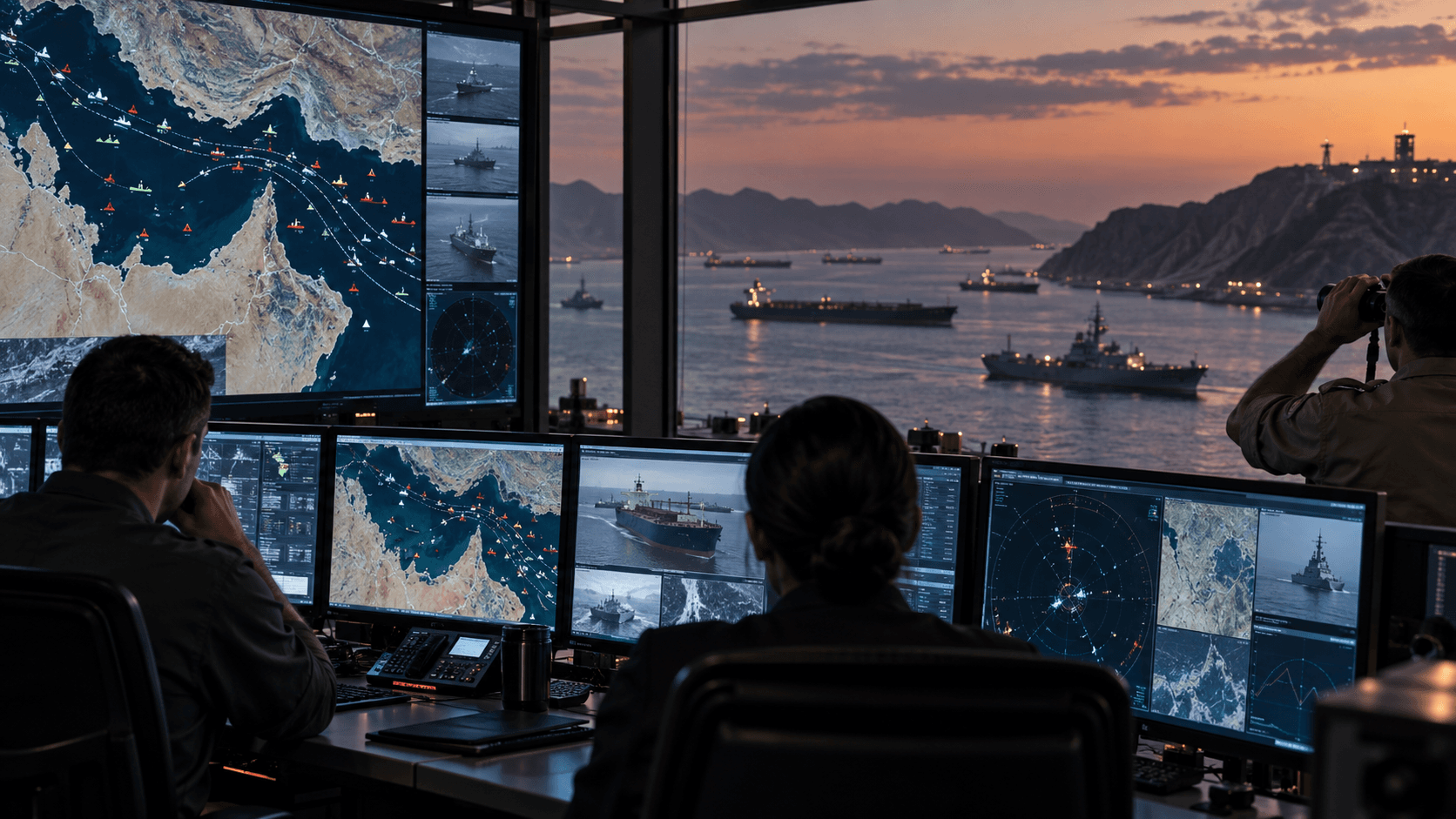
Image credit: AI-generated editorial illustration
The confrontation between Iran and the United States has widened across military bases, oil tankers and Gulf shipping routes, raising the risk that a regional crisis could disrupt one of the world's most important energy corridors.
Jordan reports missile interceptions
Jordan's armed forces said its air defences engaged 20 ballistic missiles launched from Iranian territory and destroyed 18 of them. The remaining two fell in unpopulated areas, with no casualties reported, according to the statement carried by Jordan News.
The Islamic Revolutionary Guard Corps claimed the missile operation targeted the Muwaffaq Salti Air Base near Azraq, where US forces are stationed. Jordan's public statement focused on the interception of missiles over its territory and did not independently confirm Iranian claims of damage to US facilities.
Retaliation after tanker strikes
The missile barrage followed reports that US forces had destroyed five Iranian oil tankers. The Statesman and Moneycontrol reported that Washington framed the tanker strikes as a response to repeated Iranian attacks or attempted attacks on American naval assets.
Iranian state-linked accounts presented the Jordan strike as retaliation. The competing narratives show how quickly each side is using maritime and military incidents to justify the next move. That pattern is dangerous because it makes de-escalation harder with every new attack.
Hormuz becomes a pressure point
The Strait of Hormuz sits at the centre of the confrontation. It is a narrow passage through which a large share of global oil and liquefied natural gas normally moves. Any threat to that route can affect energy prices, shipping insurance and government planning far beyond the Gulf.
Iran has described parts of the area as prohibited or unsafe, while the United States says it is trying to keep shipping routes open. That turns tanker movement into a strategic test: each vessel becomes a signal about who can control the waterway and who can bear the cost of disruption.
IRGC claims at sea
Tasnim, citing the IRGC, reported that Iranian naval forces targeted two US vessels and eight oil tankers in the Persian Gulf in response to US action against Iranian tankers. It also said the IRGC targeted 10 vessels that it described as attempting to pass through a prohibited area of the Strait of Hormuz.
Those claims should be treated carefully until independently confirmed. The important point for markets and regional governments is that Iran is openly presenting shipping as part of its retaliation strategy. Even claims alone can move behaviour if shipowners and insurers begin to see the route as too risky.
Regional risk spreads
The crisis is not limited to Iran and the United States. Jordan has now reported missile interceptions over its territory, Gulf states are watching port and tanker security, and Yemen's Houthis have intensified pressure on Saudi Arabia and Red Sea routes.
That wider pattern matters because energy flows depend on several connected chokepoints. The Strait of Hormuz affects Gulf exports, while the Red Sea and Bab al-Mandab route connect energy and trade flows toward Europe. Pressure on both corridors at once can create a much larger shock.
Why restraint matters
The most immediate danger is miscalculation. A strike on a tanker, a missile falling in the wrong place or an unverified claim being treated as fact could push governments into faster retaliation than diplomacy can absorb.
Jordan's confirmation of 18 interceptions and no casualties offers one clear factual anchor in a fast-moving story. Other claims, especially about damage to US facilities and vessels, still need careful verification. That distinction matters for responsible reporting and for policy decisions.
The Gulf crisis is now about more than battlefield messaging. It is about whether commercial shipping, oil flows and military deterrence can be kept from colliding. If the current cycle continues, the economic effects may reach consumers and governments long before any formal closure of a waterway is declared.
Source links
Comments
No approved comments yet.