Iran Seeks US Compensation as Qatar Revives Diplomacy
Qatar's prime minister is heading to Tehran as Iran ties compensation, sanctions relief and maritime access to efforts to restart diplomacy with Washington.
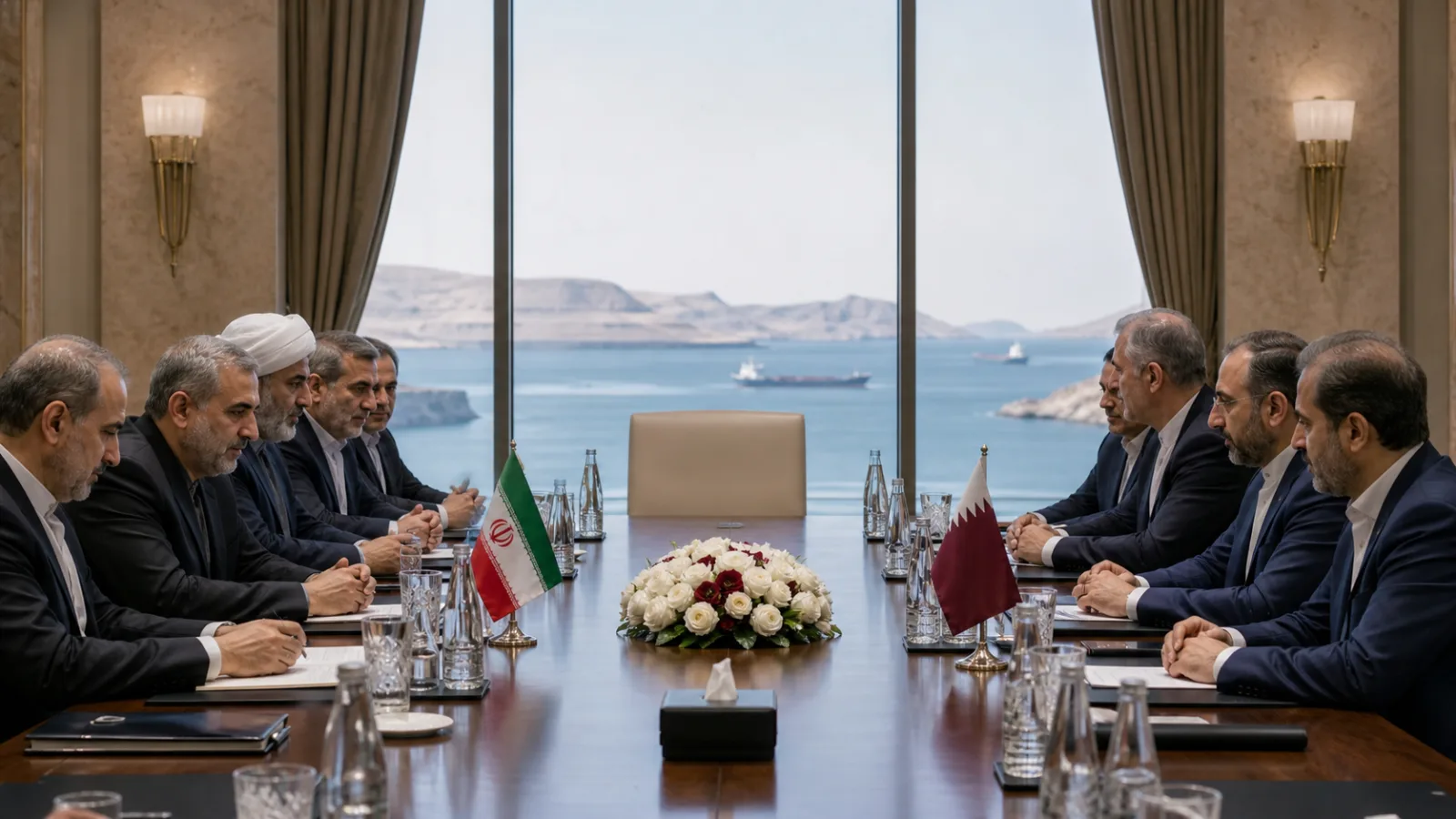
Image credit: AI-generated editorial illustration by Novexa News
Iran is pressing its demand for compensation and sanctions relief as Qatar makes a new attempt to revive diplomacy between Tehran and Washington, placing the Strait of Hormuz at the centre of a dispute with consequences far beyond the Gulf.
Qatari Prime Minister and Foreign Minister Sheikh Mohammed bin Abdulrahman Al Thani is expected in Tehran on Thursday for talks with Iranian officials. The visit follows renewed exchanges between Iran and the United States over Washington's plan to intensify economic pressure by targeting countries and companies that continue trading with Tehran.
Iranian Foreign Ministry spokesperson Esmaeil Baghaei said the Qatari leader would discuss Doha's mediation work and wider regional developments. Qatar has said the talks will also address freedom of navigation through the Strait of Hormuz and the conditions needed to reduce tensions and restore a diplomatic channel.
Qatar Steps Up Its Mediation
Qatar occupies an unusual position in the crisis. It is a close security partner of the United States, shares a major gas field with Iran and has maintained working relations with both governments. That combination has allowed Doha to carry messages when direct contact has been politically difficult or impossible.
Qatar's Foreign Ministry said on August 25 that Sheikh Mohammed and Iranian Foreign Minister Abbas Araghchi discussed the latest regional developments by telephone. Their conversation focused in part on negotiations between Iran and Oman over a temporary joint shipping corridor through Hormuz and a proposal for coordinated mine-clearing work.
The ministry said Qatar supports efforts that protect freedom of navigation and create a path towards a broader agreement. Earlier in August, Qatari officials said Doha, Oman and Pakistan were coordinating attempts to bring the two sides back to negotiations, while cautioning that no final settlement had been reached.
The latest visit therefore represents more than a ceremonial exchange. It is an effort to determine whether limited cooperation over maritime traffic can become the starting point for a wider political process.
Iran Links Compensation to a Wider Settlement
Tehran's position extends beyond reopening a shipping lane. Iranian officials have linked progress to several demands, including an end to restrictions on Iranian ports, the removal of economic sanctions and compensation for damage caused during the conflict.
The compensation demand remains disputed and has not been accepted by Washington. It should be understood as part of Iran's negotiating position, not as an agreed legal obligation or a settled figure. Tehran argues that military action and economic pressure have imposed severe costs on the country, while the United States has challenged Iran's account and raised counterclaims of its own.
US President Donald Trump responded earlier in August by saying Iran should compensate Americans harmed in attacks Washington attributes to Iran or Iran-backed groups. The competing demands illustrate how quickly negotiations can move from practical questions about shipping into a much broader argument over responsibility, sanctions and the costs of war.
Iran has also maintained for years that unilateral sanctions harm ordinary citizens by restricting trade, financial transactions and access to essential goods. US authorities say humanitarian exemptions exist, but Iranian officials and international rights experts have argued that banking restrictions and commercial caution can still obstruct legitimate imports. Any future agreement will have to distinguish immediate maritime arrangements from the more difficult debate over sanctions relief and financial redress.
Hormuz Remains the Main Pressure Point
The Strait of Hormuz is one of the world's most important energy corridors. Before the current conflict, roughly one-fifth of globally traded oil moved through the narrow waterway between Iran and Oman. Disruption has reduced traffic, increased insurance and transport costs, and kept energy markets sensitive to every diplomatic signal.
Iran and Oman have been discussing how traffic could be managed, but the status of those talks remains uncertain. An Iranian Revolutionary Guard spokesperson said the two countries had reached results acceptable to both sides concerning control of the waterway and associated revenues. A senior Iranian source later said important details were still being negotiated and that no final agreement had been completed.
That difference matters. A temporary corridor could ease pressure on shipping without resolving the political dispute over who sets the rules, whether vessels face fees or approvals, and how security is enforced. Washington has argued for navigation without Iranian restrictions, while Tehran has treated its influence over the strait as leverage in negotiations.
For Qatar and Oman, the immediate objective is to prevent an incident at sea from triggering a new round of military escalation. For energy-importing countries, the priority is a predictable route that allows commercial shipping to move without interruption.
What the Tehran Visit Could Achieve
The most realistic outcome from the Qatari visit may be a clearer sequence for negotiations rather than a comprehensive agreement. Mediators could try to connect three steps: a workable maritime arrangement, renewed observance of a ceasefire framework and the reopening of political talks between Iran and the United States.
Each step faces its own obstacle. Iran wants sanctions relief and compensation addressed alongside security guarantees. Washington wants open navigation and limits on Tehran's ability to use Hormuz as political leverage. Oman is working on the practical management of the waterway, while Qatar is trying to keep communication open between governments that remain deeply distrustful of one another.
The diplomatic activity does not mean a settlement is close. It does show that regional governments see continued dialogue as preferable to renewed strikes, further disruption of energy supplies or a prolonged closure of a vital trade route.
The Tehran meetings will be closely watched for evidence that the parties are prepared to move from public demands to a negotiated order of steps. Progress on Hormuz could create room for broader talks, but compensation and sanctions remain difficult questions that are unlikely to be resolved by one visit.
Source links
Comments
No approved comments yet.