Hormuz Deal Strains as Gaza Talks Stay Stuck
Hormuz shipping arrangements and Gaza disarmament talks show the same weakness: frameworks exist, but trust and enforcement remain missing.

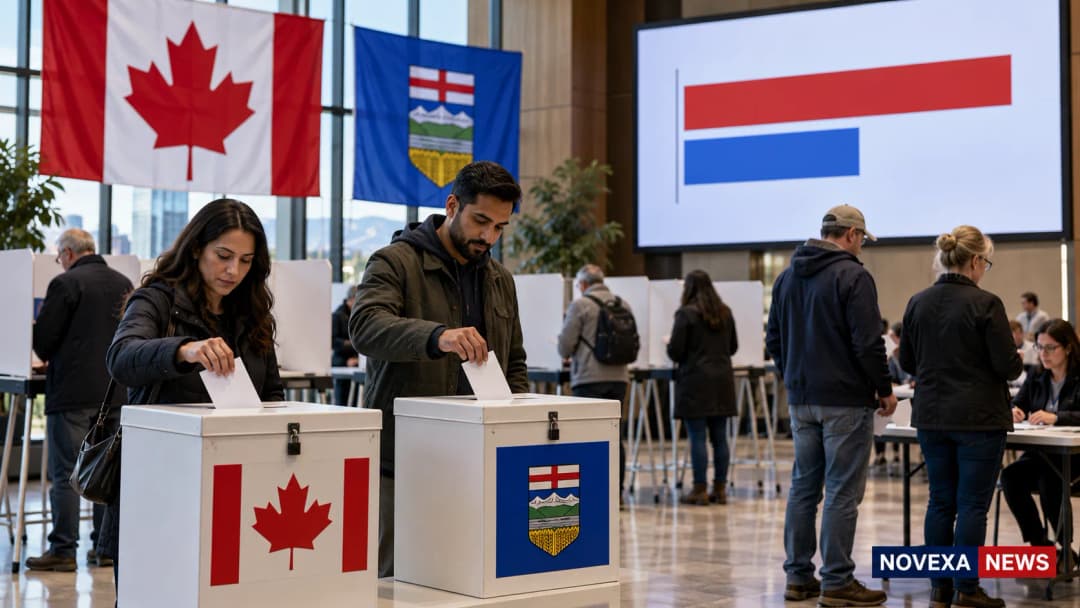
Image credit: AI-generated image / Novexa News
Two of the Middle East's most dangerous standoffs are both stuck in the same place: a diplomatic framework exists on paper, but neither side trusts the other enough to let it hold in practice.
In the Gulf, Iran and Oman spent August negotiating a temporary shipping corridor through the Strait of Hormuz, and by late August they had one. Within days, a tanker was hit by projectiles and Iran was adding more ships to a blacklist. In Gaza, Prime Minister Benjamin Netanyahu has rejected the Trump administration's 15-point disarmament plan, while the territory's ceasefire, technically in effect since October 2025, has a death toll that passed 1,000 months ago and keeps climbing.
Both disputes now share the same structural problem: an agreement that looks real in a press release does not survive contact with the underlying distrust driving each conflict.
A Hormuz deal that quickly met new pressure
Iran and Oman announced in late August that they had settled on a shipping map for the Strait of Hormuz: inbound tankers would travel a northern lane through Iranian waters, outbound traffic would use a southern lane coordinated with Oman, and a joint coordination center would track vessel movements.
Iran's parliament approved the general outlines, and negotiators reportedly agreed there would be no transit fees during the interim period, a concession aimed at reassuring shippers and insurers who had been paying a war-risk premium on Gulf routes for months.
It did not hold cleanly for long. On September 1, a tanker transiting the strait was struck by three unidentified projectiles. Two days later, Iran added 11 more vessels to a blacklist of ships it deems non-compliant, subjecting them to fines, confiscation or detention if they attempt passage.
US Vice President JD Vance drew a hard line in response, saying Washington would not talk to Iran unless attacks on commercial shipping stopped. He also claimed oil flow through the strait was moving back toward pre-war volumes while blaming elevated gasoline prices on Iranian attacks.
Why a signed arrangement did not stop attacks
The gap between the paper agreement and the shooting comes down to what each side actually settled. Iran's foreign minister, Abbas Araghchi, has described the shipping-lane arrangement with Oman as a narrow, technical fix rather than a settlement of the underlying conflict.
Iran has continued to link a fuller reopening of the strait to broader demands, including an end to hostilities, withdrawal of US forces involved in the conflict, compensation for war damage, sanctions relief and the release of frozen Iranian assets. None of those issues were solved by the Oman map.
That distinction matters because the corridor was never a substitute for a ceasefire. It was an attempt to reduce risk to some civilian shipping while the larger confrontation continued.
For markets and shipping insurers, that combination may be the realistic near-term outcome: a working technical corridor beside continued attacks, vessel blacklists and military threats around it.
Gaza talks remain stuck on sequencing
Netanyahu's government rejected the White House's 15-point Gaza plan in August, and the core disagreement has not moved much since. The plan called for a phased process in which Hamas would begin surrendering heavy weapons, weapons-production sites and tunnel infrastructure while Israeli forces began a parallel staged withdrawal.
Netanyahu rejected that sequencing, saying Israeli forces would not withdraw until Hamas was genuinely disarmed. His position requires full disarmament before a meaningful pullback, not a partial or symbolic handover.
Hamas has tied its own compliance to a different order of events: an end to Israeli strikes and a troop pullback to the line established under the October 2025 ceasefire arrangement. Its officials have said mediators and the United States should pressure Netanyahu rather than expecting Hamas to move first.
The ceasefire toll weakens the word ceasefire
The deadlock would be easier to treat as a technical dispute if the ceasefire itself were holding in the ordinary sense. It is not. Gaza's health ministry reported hundreds of deaths after the October 2025 ceasefire took effect, and NPR reported in June that the toll had passed 1,000, according to Palestinian authorities.
Israeli strikes, shelling and gunfire along the line separating Israeli- and Palestinian-controlled zones have continued through the year. Reports of new deaths in Gaza City in early September underlined that the disarmament standoff is unfolding against a backdrop of ongoing violence.
That reality makes the sequencing question sharper. For Israel, any withdrawal before Hamas gives up weapons is presented as a security risk. For Hamas and Gaza residents, disarmament while strikes continue is presented as surrender under fire.
Israel's election calendar adds pressure
Israel's Knesset dissolved in mid-July, and Netanyahu's coalition set a national election for October 27. That timing puts pressure on how the prime minister handles the Gaza front.
Far-right coalition partners have opposed any concession they see as leaving Hamas with residual military capacity. A visible Gaza withdrawal before a tight election would be difficult for Netanyahu to sell to that flank, regardless of what guarantees accompanied it.
The same political logic also echoes in the Gulf. Washington and Tehran both have incentives to frame the other side as the obstacle, because neither wants to look like it conceded first while the conflict remains active.
A smaller diplomatic track shows movement is possible
Not every regional track is frozen. On September 2, US envoys, Israeli officials and Lebanese representatives finalized an arrangement for Israel to release Lebanese detainees, with one prisoner transferred on September 3 and more releases expected to follow.
That limited step does not resolve the Hormuz or Gaza standoffs. Still, it shows that US-brokered diplomacy can produce concrete moves when the demands are narrow enough to verify quickly and when both sides can show a tangible return.
The contrast is useful. In Lebanon, the issue was bounded. In Hormuz and Gaza, the arguments reach into military posture, sanctions, sovereignty, disarmament, elections and public legitimacy.
What to watch next
On Hormuz, the test is whether the Iran-Oman shipping lane keeps functioning for commercial traffic even as Iran continues to blacklist vessels and sporadic attacks continue outside the corridor. A corridor that survives beside hostilities would be an odd kind of stability, but it may be the only kind available while Iran's broader list of conditions remains unmet.
In Gaza, the key question is no longer only the text of a disarmament plan. Israel and Hamas have both said what the other side must do first. What has not materialized is a trusted verification mechanism, a credible monitor, clear timelines and consequences for breaches.
Absent those pieces, the rising ceasefire death toll suggests the current arrangement is better described as a lower-intensity continuation of the war than a transition out of it.
Both conflicts have reached a point where announcements of frameworks and shipping maps are not, by themselves, evidence of progress. The next real signal will be whether casualty and attack figures start falling, not whether another document gets signed.
Source links
Comments
No approved comments yet.