Hezbollah Leader Rejects Disarmament as Lebanon Faces Standoff
Hezbollah leader Naim Qassem says any disarmament plan will fail, deepening Lebanon's dispute over state authority, Israeli withdrawal and postwar security.
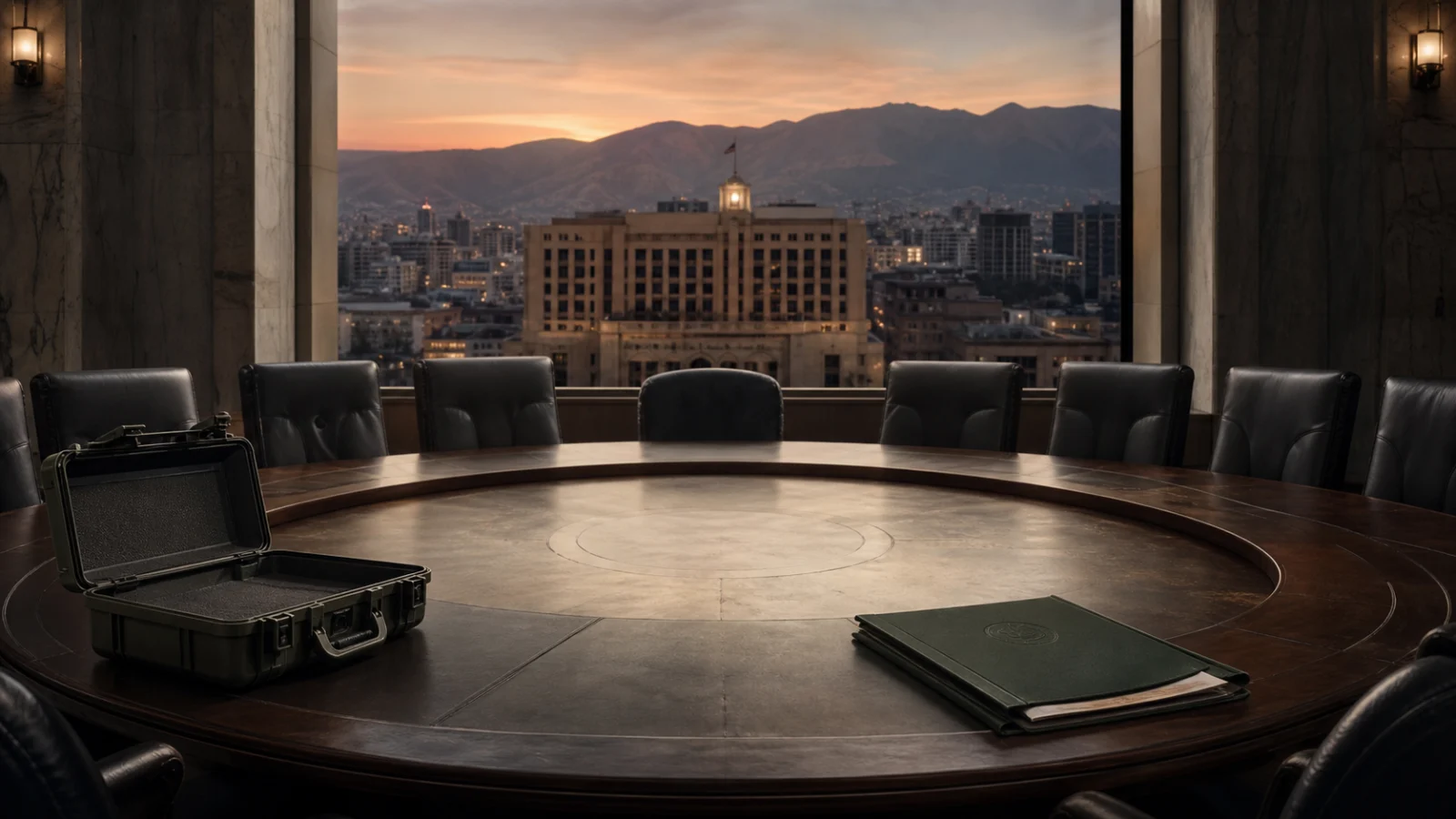
Image credit: AI-generated editorial illustration by Novexa News
Hezbollah Secretary-General Naim Qassem has again rejected efforts to disarm the group, sharpening a political confrontation over who should control armed force in Lebanon and what must happen before Hezbollah considers surrendering its weapons.
Speaking during Ashura commemorations in June at the shrine of former Hezbollah leader Hassan Nasrallah, Qassem said that any plan aimed at removing what Hezbollah calls the weapons of the resistance would not pass. He framed the issue as a matter of national defence rather than an internal arms dispute.
The statement was not a new position, but it came as Lebanon's government faced sustained domestic and international pressure to place all weapons under state authority. It also highlighted a fundamental disagreement over sequencing: Hezbollah demands an Israeli withdrawal and reliable security guarantees first, while its critics argue that a sovereign state cannot negotiate effectively while a political organisation maintains an independent arsenal.
Qassem sets limits on negotiations
Qassem said Lebanon's negotiations with Israel should be restricted to the principle of mutual security and implementation of the November 2024 cessation of hostilities. He rejected proposals for pilot, buffer or safe zones inside southern Lebanon and insisted that Israeli forces must withdraw.
His position reflects Hezbollah's argument that disarmament cannot be separated from continued Israeli military activity and the presence of Israeli forces in disputed positions. The group says its weapons provide deterrence while the Lebanese state remains unable to guarantee the country's defence on its own.
That logic is strongly contested. Lebanese officials and Hezbollah's domestic opponents argue that maintaining a separate military structure weakens national sovereignty, complicates diplomacy and leaves decisions about war and peace outside the constitutional state.
The dispute is therefore not simply about the number or type of weapons Hezbollah holds. It concerns the authority to use force, the relationship between the group and the Lebanese Armed Forces, and the political system that would govern any future defence strategy.
The ceasefire did not settle the arms question
The cessation of hostilities took effect on November 27, 2024, after destructive fighting along the Israel-Lebanon front. The arrangement was linked to full implementation of United Nations Security Council Resolution 1701, which calls for the Lebanese state to exercise authority across its territory and for armed groups outside the state to be disarmed.
The agreement reduced the intensity of fighting but did not produce a complete or durable calm. The United Nations has documented continuing violations, including air and drone strikes on Lebanese territory, and has called on Israel to withdraw from positions it retains north of the Blue Line.
The same UN framework calls on Lebanese authorities to extend state control so that no weapons or authority operate outside the government. Those paired obligations allow each side to point to the other's non-compliance.
Hezbollah says Israeli withdrawal and an end to attacks must precede serious discussion of its arsenal. The Lebanese government and international supporters of disarmament maintain that progress on state control cannot be postponed indefinitely.
Lebanon's government asserts a state monopoly on arms
President Joseph Aoun and Prime Minister Nawaf Salam have publicly supported the principle that the state alone should possess and use weapons. The government has tasked the Lebanese Armed Forces with implementing plans to extend state authority, including beyond the area south of the Litani River.
Lebanon's cabinet has also moved to prohibit Hezbollah's military and security activities outside the law and called for the group to hand its weapons to the state while continuing political activity through constitutional institutions.
Implementation remains difficult. Hezbollah is not only an armed organisation; it is a political party, social network and established force in communities where the state has often been weak. A forced confrontation could carry severe risks for Lebanon's fragile institutions and social stability.
Supporters of a negotiated approach therefore argue for a phased process tied to Israeli withdrawal, strengthened Lebanese military capacity and international guarantees. Critics worry that an open-ended process would allow the existing arrangement to continue under a new label.
The security argument at the centre of Hezbollah's refusal
Qassem's case rests on deterrence. Hezbollah says its missile and military capabilities make attacks on Lebanon more costly and compensate for the Lebanese army's limited resources.
Opponents answer that the arsenal has not prevented devastating wars and can expose the country to escalation without a national decision. They argue that genuine deterrence should be organised through state institutions accountable to Lebanon's elected government.
Both positions are shaped by Lebanon's history of invasion, occupation, civil conflict and weak central authority. That history explains why the weapons issue carries emotional and communal weight well beyond a technical security debate.
Iran and the wider regional balance
Hezbollah's relationship with Iran is another central part of the dispute. Tehran has provided political, financial and military support to the group for decades. Qassem has credited Iran with helping the resistance withstand pressure and influence the regional balance.
For Washington and Israel, that relationship makes Hezbollah part of a wider Iranian security network. For Hezbollah, Iranian support is presented as assistance to a Lebanese resistance movement confronting Israeli force.
Lebanon is caught between these competing strategic narratives. Decisions made in Tehran, Washington and Jerusalem can shape conditions inside the country, while Lebanese civilians bear the economic and physical cost when regional confrontations spill across the border.
Civilian recovery remains unfinished
The political argument can overshadow the needs of families displaced or harmed during the fighting. Communities in southern Lebanon require reconstruction, restored services, functioning schools and confidence that returning home will not expose them to renewed attacks.
Reconstruction is also tied to the weapons dispute. International donors may condition support on security and governance reforms, while Hezbollah and its allies may view those conditions as political pressure. Delays leave damaged communities in uncertainty regardless of which side controls the national debate.
A durable settlement must therefore address more than arms inventories. It needs civilian protection, reconstruction funding, border stability, accountable state institutions and a defence arrangement that Lebanese communities can regard as legitimate.
Why the standoff remains unresolved
Qassem's latest refusal confirms that Hezbollah will not voluntarily accept a disarmament plan presented as a unilateral demand. Lebanon's government, meanwhile, cannot easily abandon its commitment to exclusive state control of force without undermining its own sovereignty agenda.
The practical route lies in a verified sequence: Israeli withdrawal and compliance with the ceasefire, deployment and strengthening of the Lebanese army, an enforceable end to cross-border attacks, and a Lebanese political agreement on the future of Hezbollah's military capabilities.
None of those steps is simple, and each depends partly on actors outside Lebanon. Yet avoiding the question is also a choice, one that leaves the country vulnerable to another crisis.
Qassem has drawn a clear line against disarmament under present conditions. The next test is whether Lebanese institutions and international mediators can create conditions in which the dispute moves from competing ultimatums to a nationally accountable security settlement.
*The featured image is an AI-generated editorial illustration by Novexa News and does not depict an actual negotiation or government meeting.*
Source links
Comments
No approved comments yet.