Gaza Rubble Recoveries Raise New War Crimes Concerns
## Recovery work brings Gaza's missing back into focus The recovery of bodies and human remains from beneath destroyed buildings in Gaza has renewed pressure for independent investigation, proper identification work and…
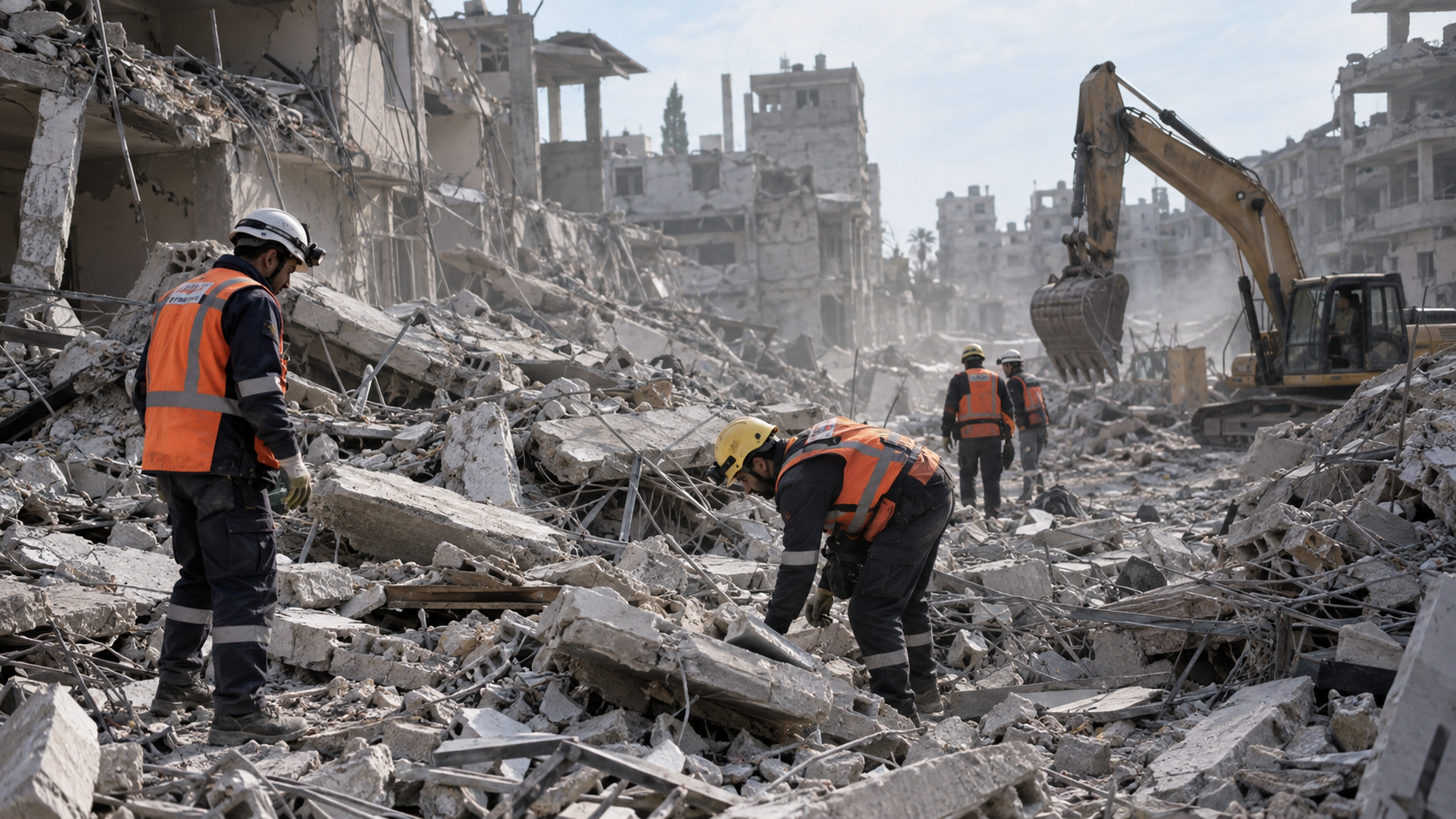
Image credit: AI-generated editorial image / Novexa News
Recovery work brings Gaza's missing back into focus
The recovery of bodies and human remains from beneath destroyed buildings in Gaza has renewed pressure for independent investigation, proper identification work and protection of possible evidence. Palestinian Civil Defence says more than 630 bodies and sets of remains have been recovered from rubble since November 2025, while Palestinian authorities estimate that thousands more people may still be buried under collapsed homes and neighbourhoods.
The figures are difficult to verify independently because access to many damaged areas remains limited. Even so, the discoveries have become one of the clearest signs of how long the human cost of the war will continue after major bombardment stops. For families who have spent months searching for relatives, each recovery can bring grief, uncertainty and the first chance of formal identification.
What the UN is asking for
UN human rights officials have repeatedly said that sites containing human remains must be protected until forensic teams can document them properly. The concern is not only humanitarian. Under international humanitarian law, the handling of the dead, the preservation of evidence and the ability of investigators to examine strike sites can matter in any future accountability process.
Volker Turk, the UN High Commissioner for Human Rights, has previously raised alarm over destruction in Gaza and called for credible investigations into incidents where civilians, detainees or people otherwise out of combat may have been killed. UN reporting in 2024 also examined Israeli strikes on residential buildings, schools, refugee camps and markets, saying several incidents raised serious concerns under the laws of war.
Families face a long search
Civil defence teams and local authorities say some remains appear to belong to entire families. In places where homes collapsed on residents, identification is especially difficult because documents, medical records and local registration systems were also damaged or displaced. The task becomes even harder when machinery is scarce, roads are blocked and forensic capacity is overwhelmed.
Local reporting cited in the brief describes a recent recovery in Gaza City's Zeitoun area where 96 bodies and remains were reported, including women and children. Novexa News is treating those local figures cautiously because direct, independent access to the site remains limited. The broader pattern, however, is consistent with UN and aid-agency warnings that many people remain unaccounted for under the debris.
Why rubble removal is also an evidence issue
Rubble clearance is usually seen as a reconstruction problem, but in Gaza it is also a legal and forensic problem. Heavy machinery can help rescue teams reach buried remains, yet uncontrolled bulldozing can disturb bodies, destroy personal effects and damage evidence that may help determine how people died. That is why UN experts have urged access for investigators before large-scale clearance operations move through the most damaged areas.
The scale of debris is enormous. UN assessments have warned that Gaza contains tens of millions of tons of rubble, enough to make recovery and rebuilding a years-long process. Without safe access, fuel, equipment and trained teams, families may continue waiting for answers long after the battlefield has shifted elsewhere.
Israel denies deliberate attacks on civilians
Israel has denied deliberately targeting civilians and says its military operations are directed at Hamas and other armed groups. Israeli officials have also argued that militants used civilian areas, tunnels and infrastructure for military purposes, creating dangers for the population around them. Those claims are part of the wider legal dispute over proportionality, distinction and precautions in attack.
International humanitarian law does not automatically make every civilian death a war crime. Investigators would need to examine targets, warnings, expected military advantage, weapons used and whether feasible precautions were taken. That is precisely why access to sites, documents, witnesses and preserved evidence is now so important.
The accountability question
The recovery of remains is likely to feed several legal and diplomatic tracks. UN bodies, international courts and human rights investigators have already reviewed aspects of the war, including attacks by Israeli forces in Gaza and crimes committed by Palestinian armed groups during the October 2023 assault on Israel. Each process depends on evidence that can be verified rather than political claims alone.
For Gaza's families, though, the first demand is simpler: to know where relatives are, to recover them with dignity and to bury them by name where possible. Until that work is done, the rubble is not only a physical obstacle to rebuilding. It is also a record of unresolved loss.
The latest recoveries show why Gaza's post-war phase cannot be treated as only a reconstruction file. It is also a search for the missing, a forensic challenge and a test of whether international institutions can preserve evidence while giving families clear answers.
Source links
Comments
No approved comments yet.