Prime Minister Shehbaz Invites Opposition for Dialogue to Ease Political Turmoil
Prime Minister Shehbaz Sharif has invited opposition parties for constructive dialogue as PTI prepares a September protest and political tensions rise around Imran Khan's detention and medical-transfer case.
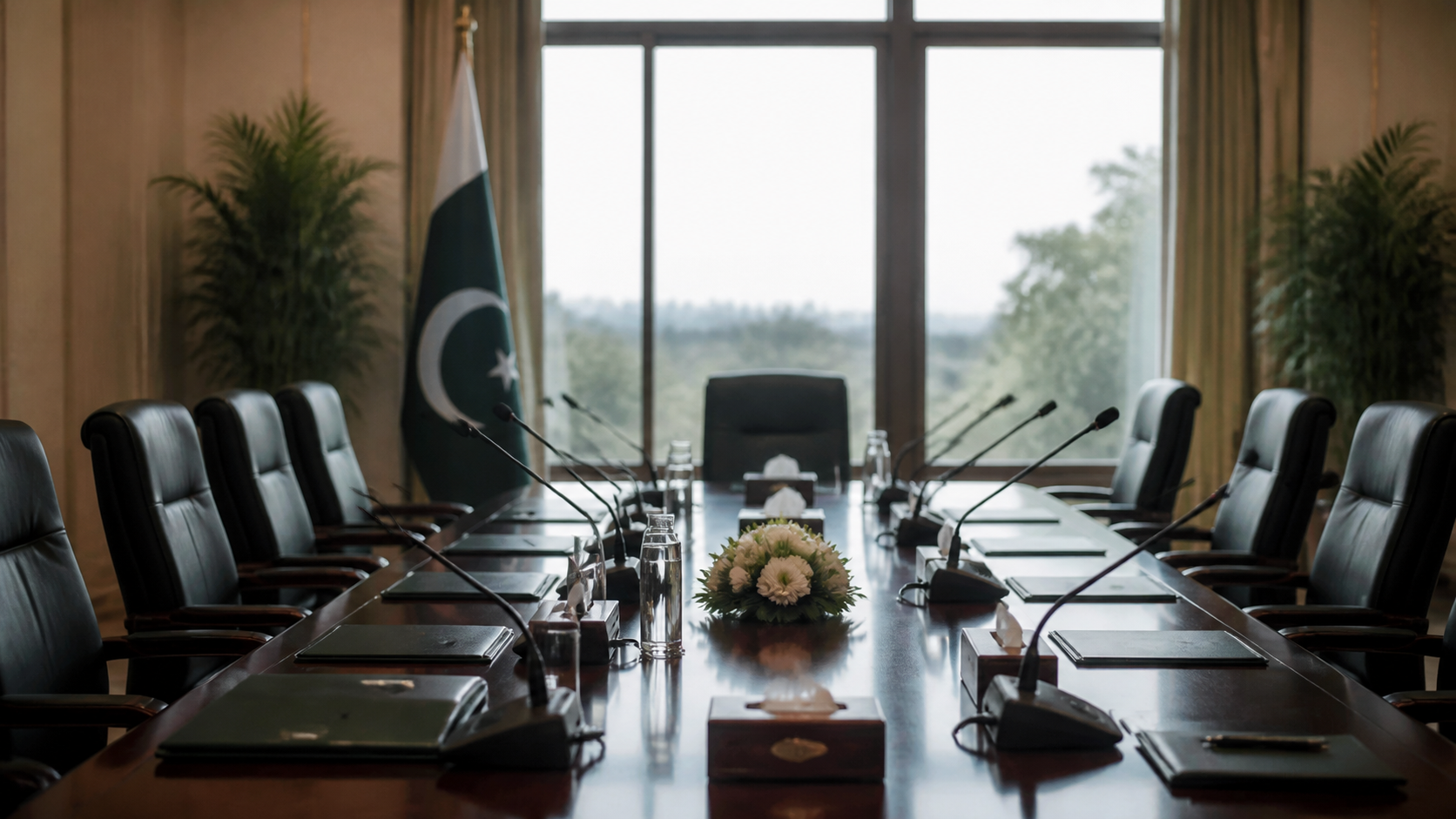
Image credit: AI-generated image / Novexa News
Prime Minister Shehbaz Sharif has renewed his offer of dialogue with opposition parties, saying Pakistan needs political understanding to protect economic stability and keep democratic institutions working. Speaking during a federal cabinet session in Islamabad on Thursday, August 20, 2026, the prime minister urged rival political forces to sit together and discuss their differences instead of allowing confrontation to deepen.
The appeal comes at a tense moment in national politics. The government and Pakistan Tehreek-e-Insaf remain locked in a bitter dispute, while PTI has announced plans for a long march towards Islamabad on September 27 to press for the release of former prime minister Imran Khan. That planned protest has added fresh pressure to an already fragile political environment.
Shehbaz told cabinet members that the government was ready for constructive talks and that the opposition also needed to show seriousness. His message was direct: Pakistan cannot afford endless political deadlock while the economy, public confidence and democratic continuity remain under strain. The prime minister said political parties should create a space where disagreement can be handled through discussion rather than street pressure.
The call for dialogue is also linked to continuing legal and political controversy around Imran Khan. Pakistan's Supreme Court has ordered that Khan be moved from Adiala Jail to Shifa International Hospital in Islamabad for a complete medical examination. The federal government and Islamabad administration have filed a review petition against that order, arguing that the decision did not follow the procedure set out under the Pakistan Prison Rules, 1978.
PTI has strongly criticized the government's response and warned of further legal action. For the party, Khan's detention and health remain central political issues. For the government, the concern is that a major protest in the capital could create public-order challenges similar to earlier confrontations between PTI workers and security forces in May 2023 and November 2024.
That is why the prime minister's offer matters. It is not only a political statement; it is also an attempt to reduce the risk of another cycle of protest, arrests, court challenges and public disruption. If both sides agree to talks, even limited contact could help lower the temperature before the September protest date.
Still, dialogue will not be easy. The government and opposition accuse each other of damaging democracy and destabilizing the country. Trust is low, and both sides face pressure from supporters who see compromise as weakness. A useful process would require a clear agenda, serious representatives and some willingness to separate legal disputes from broader political engagement.
Pakistan's economic situation makes the political deadlock more costly. Investors, businesses and ordinary citizens are looking for predictability at a time when inflation, fiscal pressure and security concerns continue to shape daily life. Political confrontation can delay decisions, weaken market confidence and distract the state from governance issues that need steady attention.
For now, Shehbaz's invitation gives both sides a possible opening. The opposition can test whether the government is prepared for meaningful talks, while the government can show that it is not closing the door on political settlement. Whether that opening becomes real will depend on actions in the coming days, not speeches alone.
A practical dialogue would also need to focus on issues beyond immediate party demands. Election rules, protest management, parliamentary conduct, legal process and economic continuity are all areas where even limited agreement could reduce uncertainty. Without that kind of structure, talks can easily become another round of statements rather than a route out of the crisis.
The main takeaway is that Pakistan's political crisis has reached a point where dialogue is no longer only a preferred option; it may be the most practical way to prevent further instability. If the government and opposition remain locked in confrontation, the September protest could become another flashpoint. If they engage seriously, the country may get a chance to move from pressure politics towards a calmer democratic process.
Source links
Comments
No approved comments yet.