Pakistan Cuts Petrol to Rs342.60 for August 28
Pakistan reduced petrol by Rs0.50 to Rs342.60 per litre and high-speed diesel by Rs0.19 to Rs371.61 under its daily pricing system for August 28.

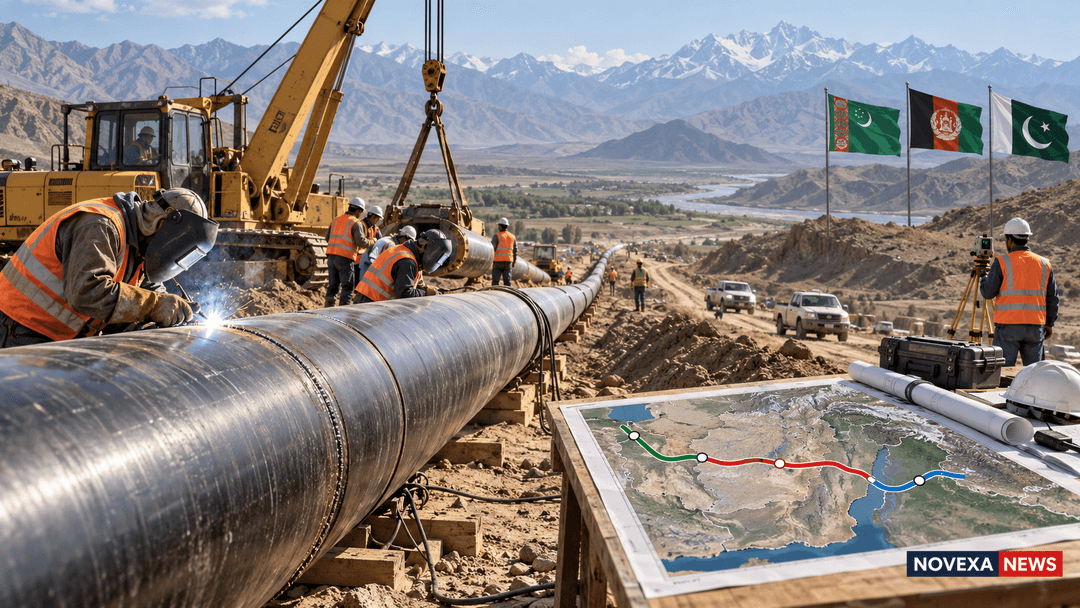
Image credit: AI-generated editorial illustration by Novexa News
Pakistan has reduced the ex-depot price of petrol by Rs0.50 per litre and high-speed diesel by Rs0.19 for August 28, offering motorists a small reversal after the previous daily revision pushed both fuels higher.
Petrol is priced at Rs342.60 per litre, down from Rs343.10. High-speed diesel is Rs371.61 per litre, compared with the previous rate of Rs371.80, according to the latest petroleum-price notification.
The rates apply specifically to August 28 under Pakistan's daily pricing mechanism. Consumers should check the next notification before relying on them for a later date because the regulator can revise ex-depot prices each day.
Pakistan fuel prices for August 28
| Product | Previous rate | August 28 rate | Change |
| --- | ---: | ---: | ---: |
| Petrol | Rs343.10 per litre | Rs342.60 per litre | Down Rs0.50 |
| High-speed diesel | Rs371.80 per litre | Rs371.61 per litre | Down Rs0.19 |
The reductions are modest. Filling a 40-litre petrol tank costs Rs20 less than it would have at the previous rate, while the same quantity of high-speed diesel costs Rs7.60 less. The change is therefore unlikely to produce a noticeable reduction in household transport costs on its own.
It does, however, interrupt a recent sequence of increases. The preceding notification raised petrol by Rs1.12 and high-speed diesel by Rs1.11 per litre for August 26 and 27.
How the daily pricing system works
Pakistan moved petroleum products to a daily review mechanism after using fortnightly and, more recently, weekly revisions. OGRA now publishes daily ex-depot prices for petrol and high-speed diesel, allowing movements in international markets to reach domestic prices more quickly.
Petroleum Minister Ali Pervaiz Malik has said the system uses a seven-day average of international market prices. OGRA can issue the daily rates without seeking separate approval from the prime minister or federal government for every notification. Rates announced on Friday remain unchanged for Saturday and Sunday under the framework described by the government.
The calculation is not based on crude oil alone. Refined-product prices, freight and insurance costs, the rupee-dollar exchange rate, import premiums, distribution margins, dealer commissions and government taxes and levies all contribute to the final ex-depot price.
Taxes remain a major part of the pump price
Government charges account for a substantial share of what consumers pay. Geo News reported taxes and related duties of about Rs114 per litre on petrol and Rs100 per litre on high-speed diesel under the current structure.
Those charges limit how much a small decline in international prices can reduce the retail rate. A change in the petroleum levy also requires approval from the Finance Division, while the daily mechanism handles ordinary market-based adjustments within the approved framework.
Fuel taxes are an important source of federal revenue, creating a difficult balance for policymakers. Reducing levies can provide quicker relief to households and transport operators, but it can also widen the fiscal gap unless the government replaces the lost revenue elsewhere.
Why diesel matters beyond transport operators
Petrol prices directly affect car and motorcycle users, ride-hailing drivers and small businesses running light vehicles. High-speed diesel has a wider effect because trucks, buses, agricultural machinery and backup generators depend on it.
When diesel remains expensive, the cost of moving food, construction material and manufactured goods can filter into wholesale and retail prices. A reduction of Rs0.19 is too small to change freight rates by itself, but repeated movements over several days can become significant.
Businesses operating vehicle fleets also face a planning challenge under daily pricing. A company can no longer assume one fuel rate will remain in place for two weeks, making procurement and delivery estimates more sensitive to short-term changes.
Global oil volatility continues to shape local rates
Pakistan imports much of the crude oil and refined petroleum products it consumes. That dependence exposes domestic prices to changes in global benchmarks, shipping costs and the rupee's value against the US dollar.
Oil markets have remained volatile amid renewed tensions in the Middle East and uncertainty over shipping through critical regional routes. International supply concerns can raise both the price of oil and the cost of transporting and insuring cargoes.
The daily mechanism passes those pressures through more frequently, but it also allows international declines to reach consumers sooner. Whether that produces meaningful relief depends on the size and duration of the global move rather than one day's adjustment.
What motorists should watch next
The August 28 reduction should be read as a limited daily adjustment, not evidence of a sustained downward trend. Petrol remains more expensive than it was earlier in the month, and high-speed diesel continues to carry substantial costs for transport and agriculture.
The next notification will show whether prices extend the decline or reverse course. The most relevant signals are international refined-product prices, the rupee-dollar exchange rate, freight conditions and any government decision affecting levies.
For consumers, the confirmed rates for August 28 are Rs342.60 per litre for petrol and Rs371.61 for high-speed diesel. Any article or social-media post quoting those figures after the effective date should be checked against OGRA's newest notification.
Source links
Comments
No approved comments yet.