Pakistan Bar Council Members Criticise Government Over Imran Khan Hospital Transfer
Eight members of the Pakistan Bar Council have criticised the federal government over the handling of former prime minister Imran Khan's hospital transfer, saying the Supreme Court's direction for his examination at…
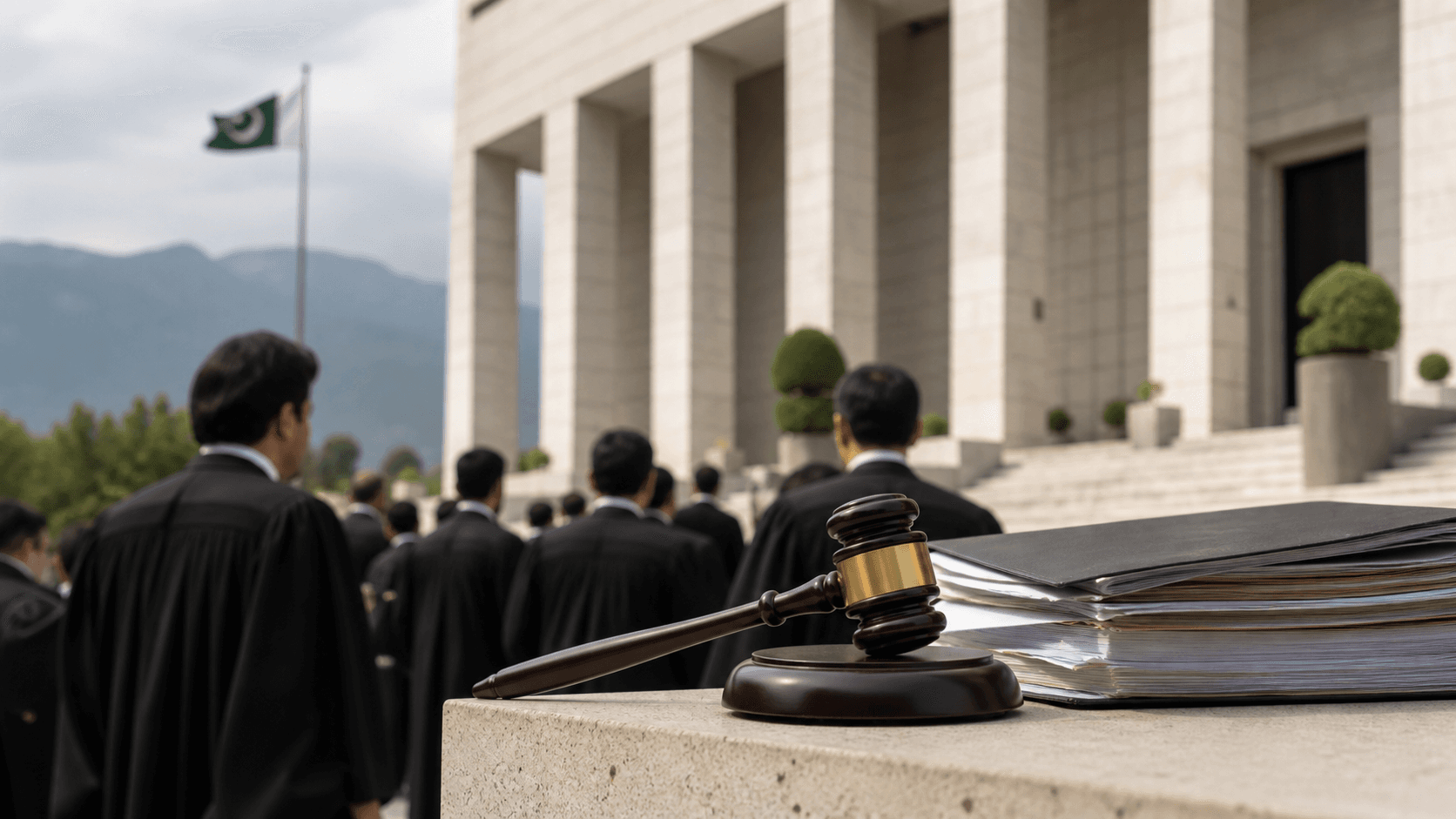
Image credit: AI-generated editorial image
Eight members of the Pakistan Bar Council have criticised the federal government over the handling of former prime minister Imran Khan's hospital transfer, saying the Supreme Court's direction for his examination at Shifa International Hospital was clear, binding and not optional for the executive.
What the lawyers said
In a joint statement, the PBC members described the government's conduct as a violation of the Supreme Court's August 18 order. They argued that once the apex court issued a direction, the executive could not decide on its own whether to follow it, delay it or substitute it with a different arrangement. Their central point was constitutional rather than medical: court orders, they said, protect citizens from arbitrary state action.
Who signed the statement
The statement was signed by Salman Akram Raja, Abid Shahid Zuberi, Muhammad Maqsood Buttar, Shafqat Mehmood Chauhan, Munir Ahmed Kakar, Abdul Sattar Khan, Salahuddin Ahmed and Qazi Muhammad Arshad. The signatories framed the matter as one involving judicial authority, rule of law and the treatment of a prisoner whose medical access had already become a national political issue.
How the dispute developed
The controversy followed a Supreme Court order directing that Imran Khan be shifted to Shifa International Hospital within 48 hours for medical examination. The order also referred to a medical panel and the presence of his personal doctor, Dr Faisal Sultan, and Dr Uzma Khan. The government filed a review petition, which was initially returned by the Supreme Court registrar over procedural objections, before the matter moved into another round of legal argument.
PIMS instead of Shifa
Despite security arrangements at Shifa International Hospital, Khan was taken to the Pakistan Institute of Medical Sciences. After doctors examined him there, he was returned to Adiala Jail. Information Minister Attaullah Tarar said the move to PIMS was made because of security concerns linked to PTI workers near the planned route and hospital area. Government representatives have also argued that the decision was not political and that doctors from Shifa were involved in the examination process.
Why the legal issue matters
For the PBC members, the review petition did not automatically suspend the earlier Supreme Court order. That distinction is important because a review application asks the court to reconsider an order; it does not, by itself, erase the obligation to comply unless the court grants a stay or modifies the direction. This is why the lawyers' criticism has focused on institutional discipline as much as on the personal case of Imran Khan.
Political and constitutional pressure
The hospital-transfer dispute has quickly moved beyond a question of medical logistics. PTI has accused the government of flouting the court's direction, while government ministers have defended the PIMS examination as a security-driven decision. The argument now touches prisoner rights, equal treatment, the authority of the judiciary and the limits of executive discretion when a court has already spoken.
The case is likely to remain politically sensitive because each side is speaking to a different concern. PTI and the PBC members are stressing compliance with a judicial order. The government is stressing security and prison-management concerns. The court process will now have to clarify whether those security concerns justified the change in hospital, or whether the original order required stricter compliance.
The broader question is how state institutions behave when a high-profile prisoner is involved. If the executive can alter the practical effect of a court order without a clear judicial modification, critics argue that public confidence in enforcement weakens. If security agencies can show a concrete and immediate risk, the government will argue that it acted to prevent disorder while still arranging medical checks. That tension is now at the heart of the legal debate.
Source links
Comments
No approved comments yet.