NASA astronaut Chris Williams smiles this July 2026
NASA astronaut Chris Williams has returned to Earth after completing his first spaceflight, closing out an eight-month mission aboard the International Space Station that included scientific work, technology…
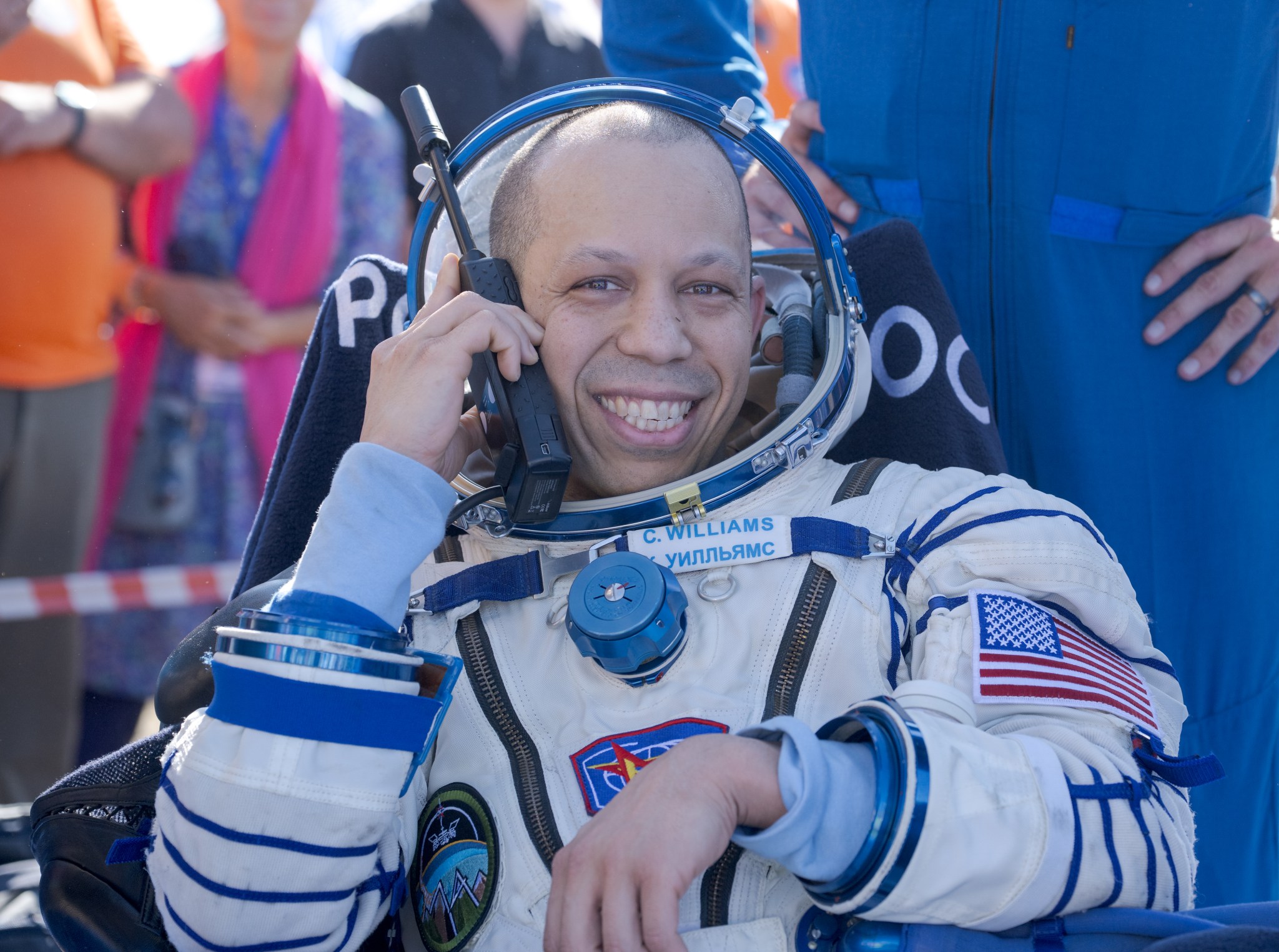
NASA astronaut Chris Williams has returned to Earth after completing his first spaceflight, closing out an eight-month mission aboard the International Space Station that included scientific work, technology demonstrations, and two spacewalks.
The return took place on July 26, 2026, when Williams landed in Kazakhstan alongside Expedition 74 Roscosmos cosmonauts Sergey Kud-Sverchkov and Sergei Mikaev. NASA described Williams as smiling in a photo taken shortly after touchdown, a simple image that marked the end of a long stay in orbit and the completion of a milestone first mission.
NASA astronaut Chris Williams returns to Earth after first mission
Williams spent eight months living and working aboard the station, where his responsibilities included supporting a range of scientific investigations and technology demonstrations. The mission reflects the routine but critical role of crewed spaceflight on the International Space Station, where astronauts contribute to research that cannot be carried out in the same way on Earth.
For NASA, Williams’ return is notable not just because it marks the safe completion of a mission, but because it followed a period of operational work in one of the most demanding environments in human spaceflight. Long-duration stays aboard the station require astronauts to adapt to microgravity while taking part in scheduled research, maintenance support, and other activities that keep the outpost functioning.
Spacewalk work supported station upgrades
In addition to his time inside the station, Williams completed two spacewalks. According to NASA, those outings were used to help prepare for space station power system upgrades and to replace a faulty joint on the Canadarm2 robotic arm.
That kind of work is significant because the International Space Station depends on regular maintenance and modernization to remain operational. Power system upgrades are central to the station’s ability to continue supporting research and crew operations, while Canadarm2 is a key robotic tool used in station work. By helping with both tasks, Williams contributed to infrastructure that supports the broader mission of the orbiting laboratory.
The return also places Williams among the many astronauts who complete a first mission that combines science, maintenance, and operational support rather than one single objective. His eight-month assignment illustrates how modern spaceflight often blends research goals with engineering tasks that are essential to keeping the station productive.
Why the mission matters
Williams’ first mission highlights the ongoing value of the International Space Station as a platform for human space research. NASA’s summary points to both scientific investigations and technology demonstrations as part of his work, showing that the station continues to serve as a testing ground for ideas and systems that may inform future exploration.
His return to Earth also provides a reminder of the international nature of station operations. The landing in Kazakhstan involved astronauts from NASA and Roscosmos, reflecting the multinational cooperation that remains central to the station program.
With this mission complete, Williams has added both flight time and hands-on station experience through research support and spacewalk operations. NASA’s image and summary capture a short but important moment: the end of a first mission and the successful return of a crew member who helped keep the International Space Station running while advancing work in orbit.
Comments
No approved comments yet.