Dar Says Afghan-Based Terrorism Threatens Regional Peace and Development
Ishaq Dar tells ECO ministers that Afghan-based militancy threatens regional peace, trade and connectivity, while urging verifiable action.
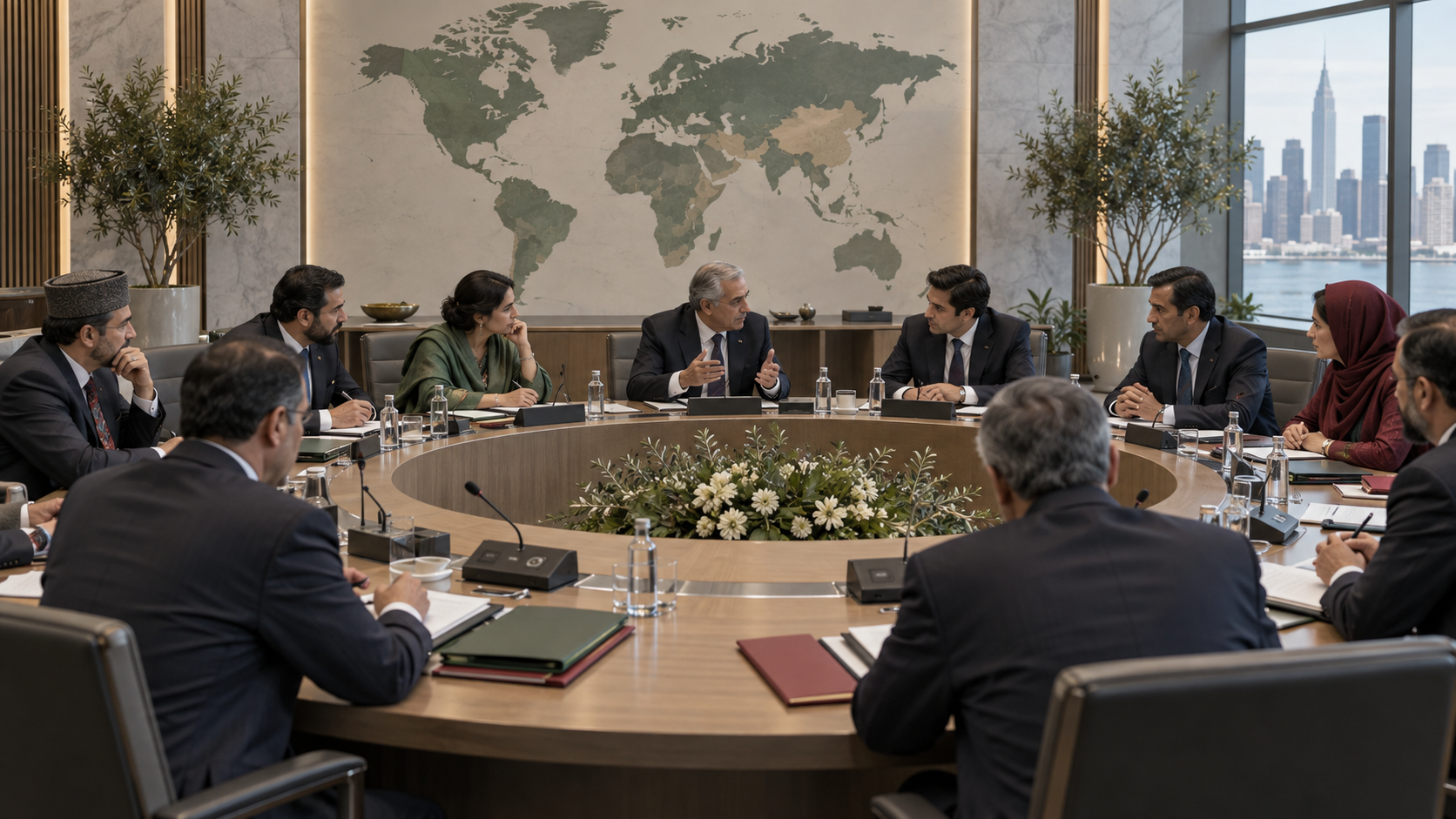
Image credit: AI-generated editorial illustration by OpenAI
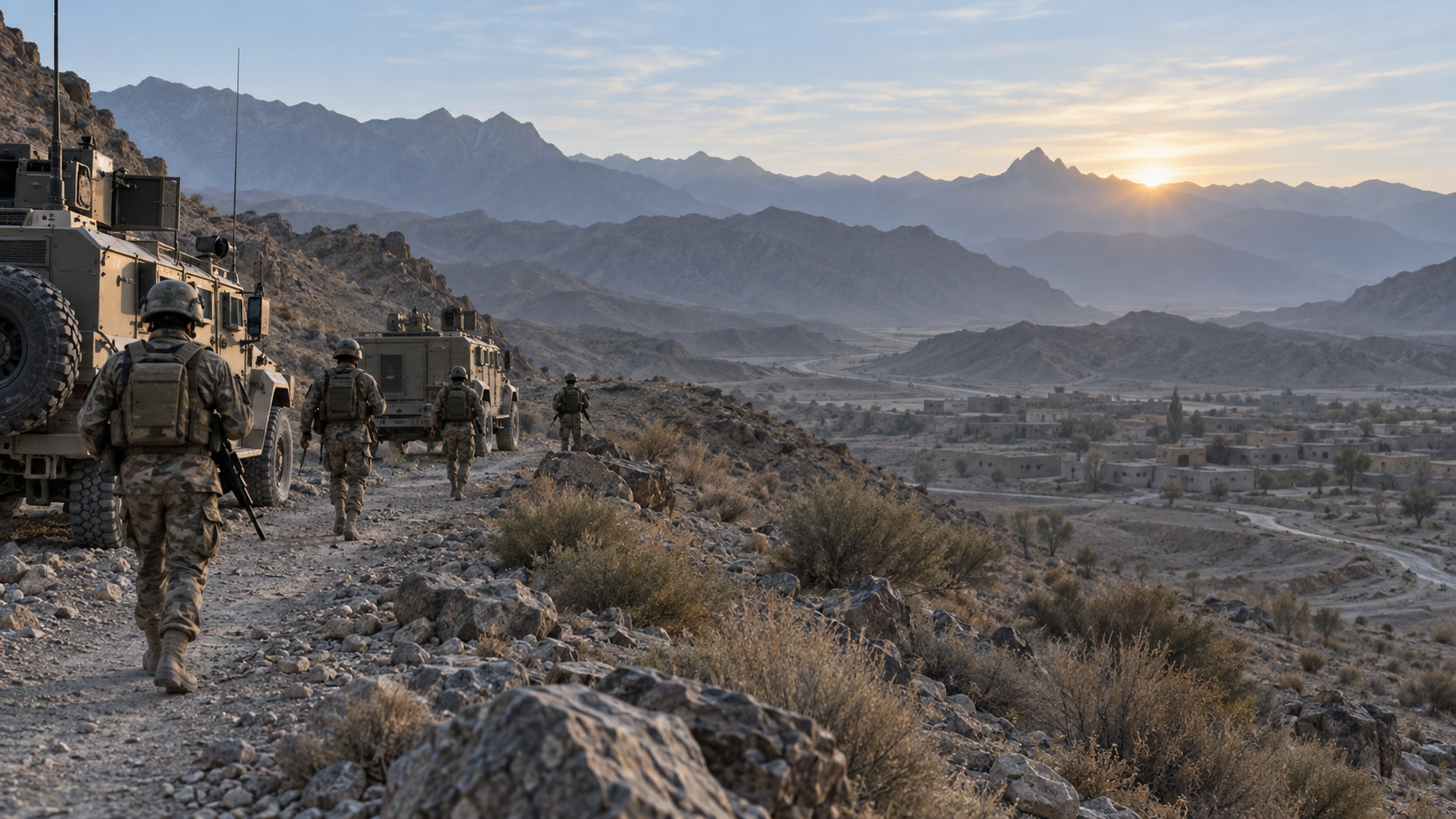
Deputy Prime Minister and Foreign Minister Ishaq Dar has told an Economic Cooperation Organisation meeting that armed groups operating from Afghanistan are obstructing regional peace and development, while calling for verifiable action by the Taliban authorities against organisations Pakistan says threaten its security.
Dar delivered the warning at the 27th informal meeting of the ECO Council of Ministers in New York, held on the sidelines of the 81st session of the United Nations General Assembly. Pakistan chaired the meeting as it began its 2026-27 term at the head of the council.
The foreign minister said Pakistan wanted a peaceful, stable and prosperous Afghanistan that was integrated into the region and at peace with its neighbours. He argued, however, that closer trade and connectivity could not reach their full potential while cross-border militancy remained unresolved.
Pakistan seeks verifiable action
Dar said Islamabad had pursued constructive engagement with the Taliban administration and offered concessions related to bilateral and transit trade. Pakistan has also backed work on the proposed Uzbekistan-Afghanistan-Pakistan railway, which is intended to connect Central Asian economies with Pakistani ports.
According to Dar, Pakistan's principal expectation was that the authorities in Kabul address its security concerns through concrete and verifiable measures. He specifically named the Tehreek-e-Taliban Pakistan, the Baloch Liberation Army and affiliated groups as threats to Pakistani citizens and sovereignty.
Those statements set out Pakistan's position. The Afghan Taliban have disputed Islamabad's allegations that Afghan territory is being used to organise attacks and have objected to Pakistani military operations inside Afghanistan. The disagreement has contributed to a sharp deterioration in relations and repeated border confrontations.
Dar linked the security question to the wider regional economy. Infrastructure projects, customs integration and transit corridors require confidence that routes, workers and investments will be protected. Persistent militant violence raises costs and can discourage the long-term financing needed to connect landlocked Central Asian states with markets in South Asia and beyond.
ECO trade remains below potential
The meeting also addressed the ECO's economic performance. Dar said the organisation's member states cover roughly eight million square kilometres and have a combined population approaching half a billion, but account for only about 2.2 per cent of world trade. Intra-regional trade represents approximately eight per cent of the members' total commerce, he said.
Pakistan wants the organisation to accelerate transport links between Central Asia and ports on the Arabian Sea, harmonise customs procedures and improve transit systems. Dar also called for work towards a functional and digitally enabled free-trade area based on the roadmap adopted by ECO trade ministers in November 2025.
The proposals reflect a longstanding challenge for the organisation: its members have geographic advantages and significant energy, agricultural and mineral resources, but political tensions, border restrictions and uneven infrastructure continue to limit commercial integration.
Dar said Pakistan was prepared to act as a regional gateway by using its location and a more liberal visa regime to facilitate the movement of people and goods. Islamabad is due to host the 30th ECO Council of Ministers meeting in November, giving it another opportunity to seek agreement on practical measures.
Climate and institutional reform
The foreign minister also identified climate change as a growing threat to water supplies, agriculture and livelihoods. He urged cooperation on disaster-risk reduction, resilient infrastructure, sustainable energy and adaptation, areas in which several ECO countries face overlapping pressures.
Dar argued that the ECO secretariat and affiliated institutions needed review and streamlining so their mandates matched current political and economic conditions. Pakistan is also advancing strategic goals for economic cooperation covering 2026 to 2035.
The New York meeting placed security, trade and climate resilience within the same regional agenda. Pakistan's case is that Afghanistan could become a bridge between Central and South Asia, but only if neighbouring countries can rely on its territory not being used by armed groups.
For that reason, Islamabad is combining calls for continued engagement and economic assistance with demands for action against militants. Whether that approach produces results will depend on relations with Kabul, support from other regional governments and the ability of ECO members to turn broad connectivity plans into funded projects with workable security arrangements.
Source links
Comments
No approved comments yet.