Pakistan Inflation Faces Fresh Middle East Energy Risk
Pakistan enters FY2027 with stronger reserves and remittances, but renewed Middle East conflict and volatile oil prices threaten inflation and the trade balance.

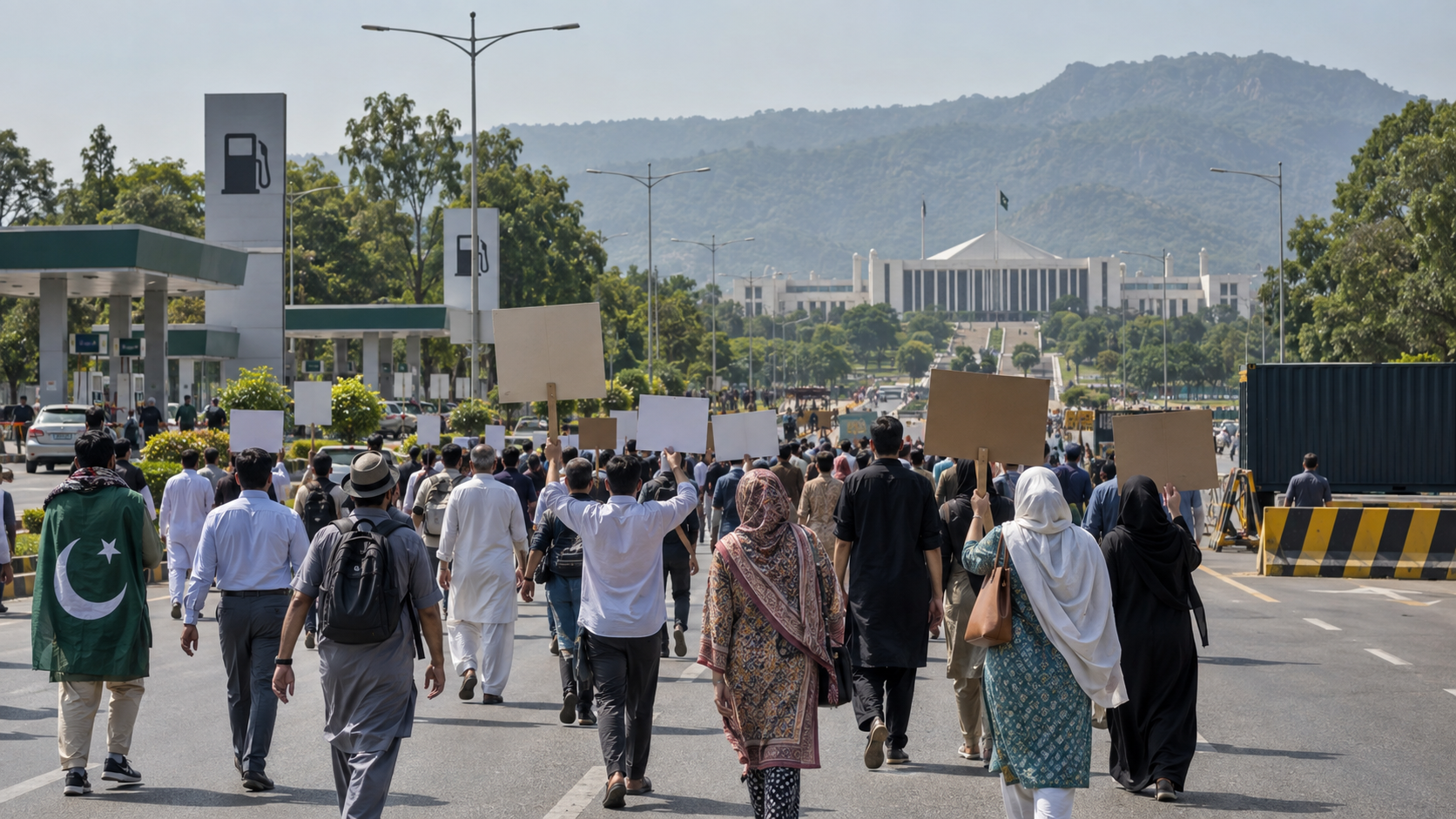
Image credit: AI-generated editorial illustration by Novexa News
Pakistan begins the 2026-27 fiscal year with more economic breathing room than it had a year earlier, but the relief is vulnerable to events far beyond Islamabad's control. The Finance Division has warned that renewed conflict in the Middle East could push up global energy prices, unsettle trade routes and place fresh pressure on inflation and Pakistan's external accounts.
The warning matters because imported fuel affects far more than the price displayed at a petrol station. A sustained rise in oil costs can increase electricity generation, transport, manufacturing and agricultural expenses. Those increases can then move through supply chains into food and household prices, while a larger energy import bill adds pressure to the trade balance and demand for foreign currency.
Inflation has eased, but remains elevated
Pakistan's headline consumer inflation stood at 11.1 percent year on year in June 2026, down from 11.7 percent in May. The full-year average for FY2026 was 7.1 percent, compared with 4.5 percent a year earlier. Transport recorded one of the strongest annual price increases, while housing, utilities, fuel and non-perishable food also made substantial contributions.
For July, the Finance Division projected inflation in a range of 9 to 10 percent. That forecast reflected higher international oil prices and the risk that energy and transport costs would pass through to domestic prices. The report noted that Brent crude reached $100.70 a barrel on July 23 after renewed United States-Iran tensions reversed part of an earlier decline in global energy prices.
The direction of oil prices will therefore be important for household budgets and monetary policy. The State Bank of Pakistan kept its policy rate at 11.5 percent on July 27, judging that the broader outlook had improved but remained exposed to another escalation in the Middle East.
Remittances provide a substantial cushion
Pakistan's external position has stronger buffers than it did during earlier periods of severe pressure. Workers sent home $41.6 billion during FY2026, an increase of 8.6 percent from the previous year. June alone brought $3.5 billion, with Saudi Arabia, the United Arab Emirates and the United Kingdom among the largest corridors.
Foreign-exchange reserves stood at $22.7 billion on July 17, including $17.3 billion held by the State Bank. The current account recorded a relatively small $139 million deficit for the fiscal year, although June produced a larger monthly deficit of $649 million.
These buffers offer protection, but they do not remove the underlying exposure. Imports of goods and services rose to $76.4 billion from $70.4 billion, while exports were broadly unchanged at $40.9 billion. The resulting goods-and-services trade deficit widened to $35.5 billion from $29.6 billion. If oil remains expensive, the import bill could become harder to contain.
Industry and public finances show improvement
The domestic picture was not uniformly weak. Large-scale manufacturing expanded by 5.8 percent during July to May of FY2026 after contracting in the comparable period a year earlier. Sixteen of 22 industrial sectors recorded growth, led by contributions from automobiles, food, clothing and petroleum-related production.
The fiscal deficit also narrowed to 1.6 percent of gross domestic product during July to May, compared with 3.8 percent in the same period a year earlier. The government attributed the improvement to higher revenue collection and lower expenditure, including a decline in markup payments. Pakistan is targeting real GDP growth of 4 percent in FY2027.
Those gains explain why the Finance Division believes the economy is better prepared for an external shock. They also show why another energy-price surge would be costly: it could weaken purchasing power just as industry and domestic demand are beginning to recover.
What the risk means for Pakistan
The central question is not whether every movement in crude oil immediately reaches consumers. Domestic taxes, exchange rates, inventories and government pricing decisions all influence the eventual effect. The concern is cumulative. A prolonged period of expensive energy can raise import costs, widen the trade deficit, complicate interest-rate decisions and slow the decline in inflation.
Pakistan's record remittance inflows, higher reserves and improved fiscal position give policymakers more room to respond than in previous crises. Even so, the July outlook makes clear that stability remains connected to developments in the Gulf. For businesses and households, the next signals to watch are international oil prices, monthly inflation, the rupee, reserve levels and any disruption to major shipping routes.
Source links
Comments
No approved comments yet.