Pakistan says over 20 health deals worth $629.5m signed with China
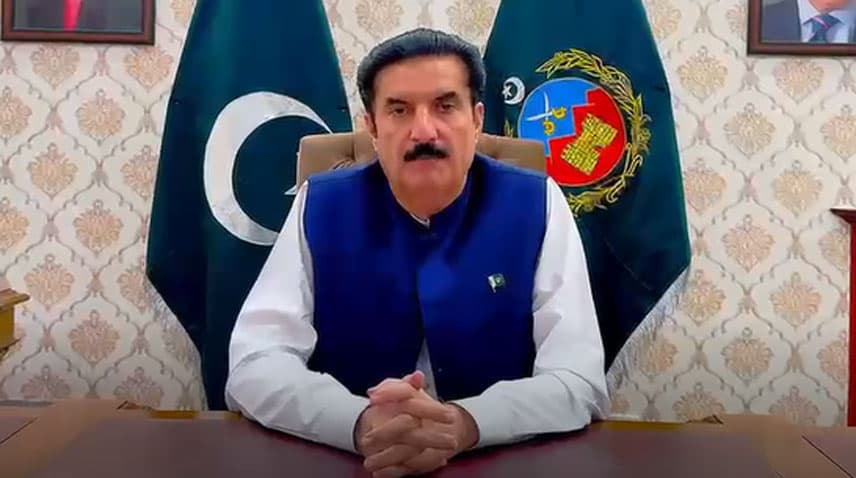
Pakistan and China signed 22 formal commercial agreements worth a combined $629.5 million at a two-day health sector conference in Islamabad, Federal Minister for National Health Services Syed Mustafa Kamal announced…
Pakistan and China signed 22 formal commercial agreements worth a combined $629.5 million at a two-day health sector conference in Islamabad, Federal Minister for National Health Services Syed Mustafa Kamal announced, alongside a further 84 memorandums of understanding valued at roughly $800 million that are yet to be converted into binding deals.
What was signed, and where
The conference, held July 17-18, brought together 240 Chinese delegates from 140 companies and 430 Pakistani delegates from 210 companies for a series of business-to-business meetings aimed at deepening pharmaceutical and medical-device cooperation between the two countries.
Of the 22 finalized agreements, eight covered vaccine production, eight covered medical devices, two covered active pharmaceutical ingredients, two covered clinical trials, and two covered generic formulation injectables — a spread that reflects Pakistan's stated priority of building domestic manufacturing capacity rather than simply increasing imports.
Closing the API gap
The emphasis on active pharmaceutical ingredients, or APIs, points to a specific structural weakness in Pakistan's health sector that officials have flagged repeatedly: the country currently manufactures around 85% of the medicines it consumes domestically, but imports roughly 95% of the raw active ingredients that go into those medicines from abroad, leaving the sector exposed to supply shocks and currency fluctuations well outside Pakistan's control.
Minister Kamal framed the agreements as a deliberate move away from that dependency: "I would like to congratulate the nation that in this two-day B2B conference, 22 companies signed the agreements worth $629.5 million." He added that the government's focus going forward would be on "legally binding commercial agreements that lead to tangible investments, technology transfer, industrial growth and employment," rather than symbolic MoUs that never translate into completed projects.
Part of a broader vaccine self-sufficiency push
The health deals also come shortly after Pakistan approved its first National Local Vaccine Production Policy, a framework intended to reduce the country's reliance on imported vaccines and strengthen domestic health security more broadly. Taken together, the API and vaccine-production agreements signed with Chinese firms represent an attempt to address two of the most persistent vulnerabilities in Pakistan's pharmaceutical supply chain in a single coordinated push, though the scale of the remaining 84 MoUs suggests officials are betting on considerably more investment materializing if those preliminary understandings convert into signed contracts over the coming months.
Turning MoUs into factories
The gap between the 22 finalized deals and the far larger pool of 84 MoUs is a familiar pattern in Pakistan's foreign investment announcements: preliminary understandings are relatively easy to sign at a conference, but converting them into operating factories, staffed clinical trial sites, or functioning vaccine production lines requires sustained follow-through on regulatory approvals, land allocation, and financing that often takes years rather than months. Officials will likely be judged less on the headline figures from this conference and more on how many of those 84 additional understandings eventually appear as the kind of binding, legally enforceable agreements Minister Kamal emphasized in his remarks.
The scale of Chinese delegate participation — 140 companies represented across 240 individuals — also signals a sustained level of commercial interest that goes beyond a single high-profile signing event, suggesting Islamabad's health ministry sees this conference as the opening round of a longer negotiation process rather than a one-off showcase, with further sector-specific meetings expected as individual companies work through due diligence on the projects outlined in this round of talks.
Comments
No approved comments yet.