NASA’s MAVEN finds Mars auroras may work like Earth’s
NASA says its MAVEN mission has identified a key piece of the puzzle behind some Martian auroras, showing they may be powered by the same basic process seen on Earth.
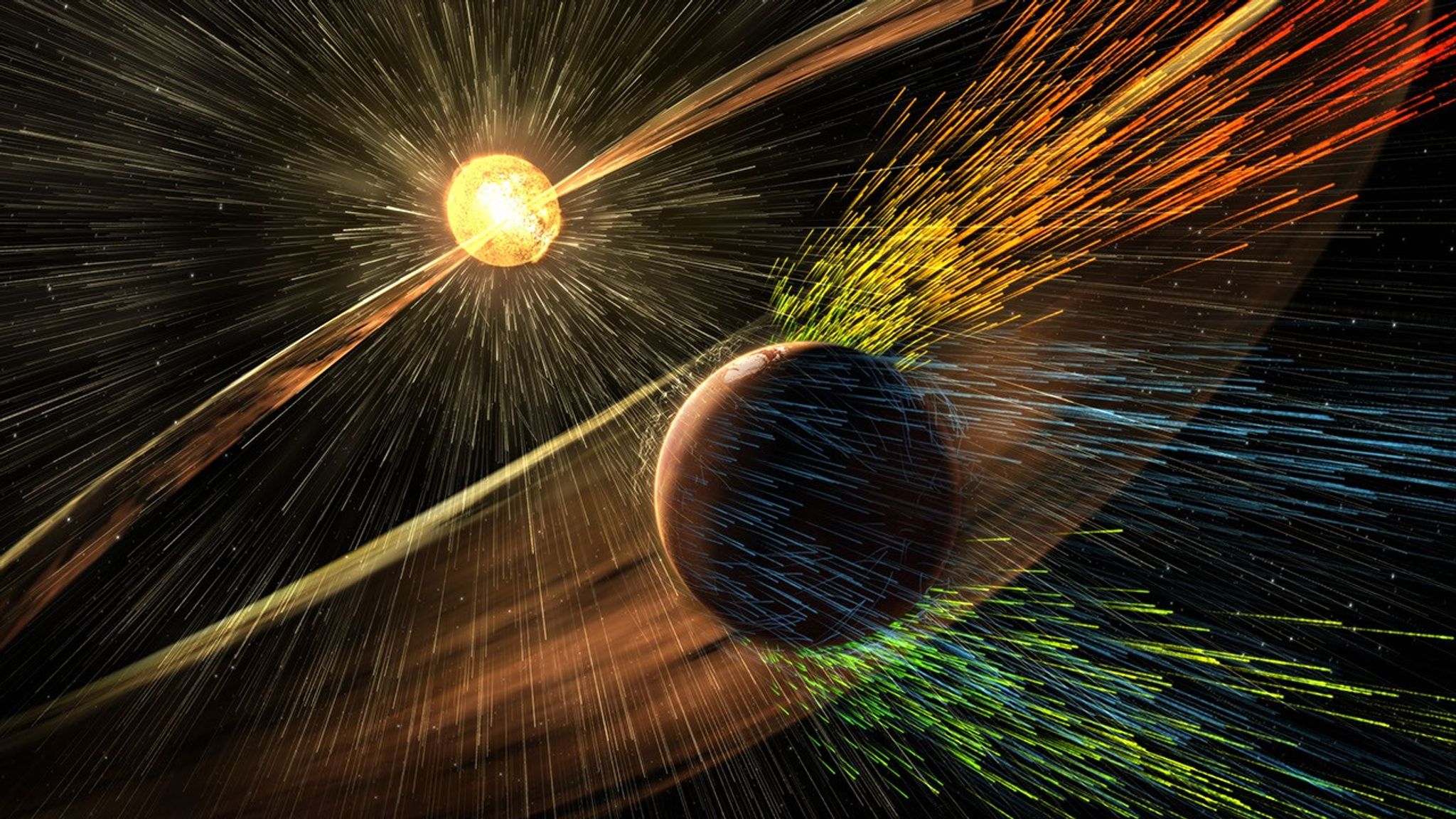
NASA’s MAVEN mission has helped clear up a long-running question about auroras on Mars, with new findings suggesting that some of the Red Planet’s light displays form in a way similar to auroras on Earth. According to NASA, scientists working with MAVEN — short for Mars Atmosphere and Volatile Evolution — have uncovered a key piece of the process behind these Martian auroras. The result points to the same general mechanism that on Earth helps drive charged particles into the atmosphere, producing the familiar northern and southern lights. The work adds to the picture of how Mars interacts with the space environment around it. Unlike Earth, Mars does not have a global magnetic field in the same way our planet does, so its atmosphere and upper atmosphere behave differently when exposed to the stream of particles coming from the Sun. That makes auroras on Mars especially interesting to researchers, because they can reveal how solar energy is transferred into the planet’s atmosphere. NASA says the findings were published Thursday in Nature Communications. The agency’s summary indicates that scientists have now identified a process that helps explain how these auroras are formed, and that it resembles the particle-circulation and acceleration mechanism seen at Earth. That comparison matters because auroras are not just colorful sky events. They are also a sign that charged particles are interacting with a planet’s atmosphere and magnetic environment. On Mars, studying that interaction can help scientists better understand atmospheric loss, space weather impacts, and how the planet has changed over time. MAVEN has been orbiting Mars to study the planet’s upper atmosphere and how it has evolved. Over time, missions like this have helped build a more detailed map of how the Sun affects Mars, from the way particles move through space to how they shape the planet’s thin atmosphere. The new research appears to answer only part of the larger question. NASA’s summary does not spell out every detail of the mechanism in the brief feed available here, and the exact implications for all types of Martian auroras remain unclear from the initial information. But the takeaway is significant: at least one class of aurora on Mars now seems to fit into a familiar framework that scientists already recognize from Earth. For researchers, that creates a useful bridge between two very different planets. For the public, it is another reminder that Mars is not a dead, static world. It is active in ways we can still only partly see, and its atmosphere continues to respond to the same solar forces that shape space weather throughout the solar system. The result also underscores why MAVEN remains an important mission years after arrival at Mars. Each new finding does more than add a detail to the Martian story; it helps scientists compare planets, test theories, and refine how they understand the space environment around Earth and beyond.
Source: NASA Breaking News - https://science.nasa.gov/missions/maven/nasas-maven-illuminates-new-understanding-of-auroras-at-mars/