Government Raises Petrol and Diesel Prices
Pakistan has raised petrol and high-speed diesel prices in response to continued pressure in international oil markets, with the new rates taking effect from September 15. ## New petrol and diesel prices The federal…
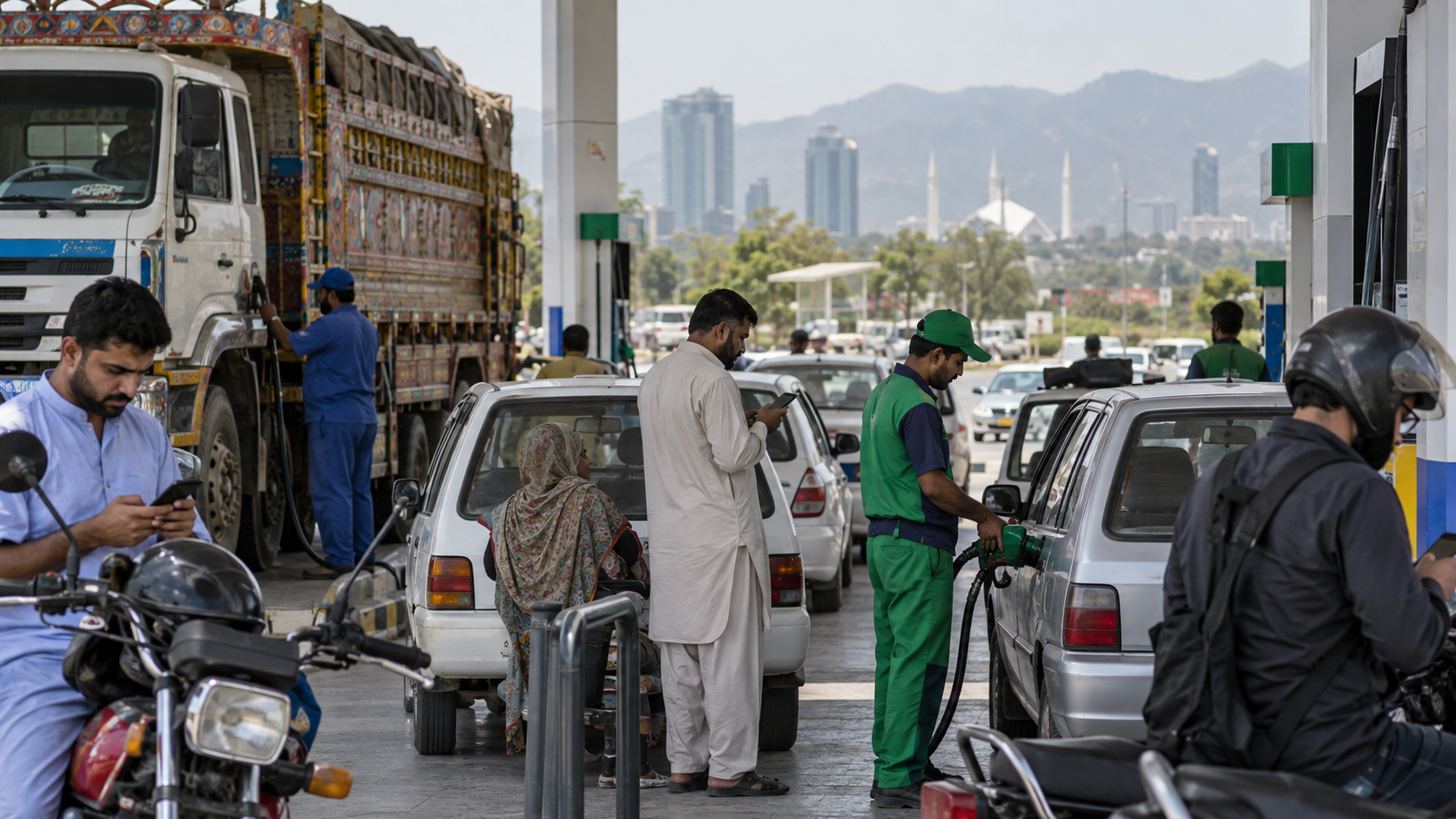
Image credit: AI-generated editorial image / Novexa News
Pakistan has raised petrol and high-speed diesel prices in response to continued pressure in international oil markets, with the new rates taking effect from September 15.
New petrol and diesel prices
The federal government increased petrol by Rs4.42 per litre and high-speed diesel by Rs6.10 per litre. After the revision, petrol has been fixed at Rs380.24 per litre, while high-speed diesel will sell at Rs409.42 per litre.
The change follows ongoing volatility in global crude markets, where geopolitical tensions and supply concerns continue to influence prices. Pakistan's domestic fuel rates remain closely tied to international movements because the country depends heavily on imported petroleum products.
Taxes and duties remain significant
According to the Petroleum Division's notification cited in the draft, taxes and duties amount to Rs114 per litre on petrol and Rs100 per litre on diesel. That means the final retail price reflects not only the imported cost of fuel, but also the government's revenue structure.
Fuel taxation remains a sensitive issue because petrol and diesel are among the government's major revenue sources. At the same time, any price increase is quickly felt by households, transporters and businesses.
Prices remain below earlier peaks
The latest rates are still below the highs recorded earlier in the year, when market disruption pushed high-speed diesel to Rs520.35 per litre on April 3 and petrol to Rs458.41 per litre. Prices later eased as international conditions improved, but renewed instability has again placed upward pressure on domestic rates.
That pattern shows why fuel prices remain difficult to manage. A government can provide temporary relief, but external market shocks can quickly change the domestic pricing outlook.
Relief for smaller vehicle users
The price revision comes alongside targeted relief announced by Prime Minister Shehbaz Sharif. Under that scheme, motorcycle, rickshaw, Qingqi and other two- and three-wheeler users are to receive Rs100 per litre relief on a monthly quota of 20 litres. Owners of cars up to 800cc are to receive the same per-litre relief on a monthly quota of 30 litres.
The relief is meant to shield lower- and middle-income users from the immediate impact of higher fuel prices. Motorcycles, rickshaws and small cars are not luxuries for many families; they are essential for commuting, work and daily errands.
Daily pricing mechanism
The latest adjustment also follows a change in Pakistan's petroleum pricing mechanism. Petroleum Minister Ali Pervaiz Malik previously said prices would be determined on a daily basis in response to international market movements after renewed hostilities in the Persian Gulf.
Under the revised arrangement, the Oil and Gas Regulatory Authority is responsible for determining prices according to market changes. This approach is meant to make domestic pricing more responsive, though it can also mean consumers see more frequent changes at the pump.
Economic impact of the increase
Petrol is widely used by motorcycles, private motorists and rickshaws, while diesel is central to freight, agriculture, heavy transport, power generation and industrial operations. Higher fuel prices can therefore raise transport fares, delivery costs and production expenses.
The government's challenge is to balance three pressures at once: international oil prices, domestic affordability and fiscal needs. The latest increase shows that global energy pressure is still feeding into Pakistan's economy, even as targeted relief is being used to soften the impact on vulnerable users.
Comments
No approved comments yet.