Going with the flow: Renewable energy battery breakthrough
A 3D-printed battery designed at Queen's University Belfast could speed up energy storage research.
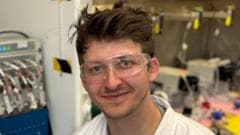
A 3D-printed battery developed at Queen’s University Belfast could help speed up research into new ways of storing renewable energy, according to BBC Science.
The project is drawing attention because it combines additive manufacturing with battery design, offering a potentially faster route for scientists testing energy storage concepts. Based on the available report, the device was designed at the university and is being presented as a breakthrough that could make experimental work in the field more efficient.
Energy storage remains a major part of the shift toward renewable power, since sources such as wind and solar do not generate electricity at a constant rate. Batteries and other storage systems are used to help balance that variability, making it possible to save energy when supply is high and release it later when demand rises. Research that can accelerate the development of such systems is therefore significant for the wider clean energy sector.
The BBC Science report says the battery was created at Queen’s University Belfast, but the feed summary does not provide technical specifications, performance data or details about how the design compares with existing batteries. Even so, the use of 3D printing in battery research suggests a flexible approach that may allow scientists to prototype and refine designs more quickly than with traditional manufacturing methods.
For researchers, that kind of speed can be valuable. Faster prototyping can shorten the time it takes to test new materials, layouts or structures, and may help identify which ideas are most promising for future energy storage applications. It may also lower barriers to experimentation, particularly in academic settings where rapid iteration can be important.
The report is based on a monitored public feed and is attributed to BBC Science. Novexa News is publishing this summary using only the verified details available in the feed.
Source: BBC Science - https://www.bbc.co.uk/news/articles/c3dyd4l8250o?at_medium=RSS&at_campaign=rss