How Spain made Argentina look ordinary
The scoreline said Spain had beaten Argentina 1-0 after extra time. The match said something far more emphatic. For much of the World Cup final in New Jersey, Spain did not merely outplay the defending champions. They controlled the game so completely that...
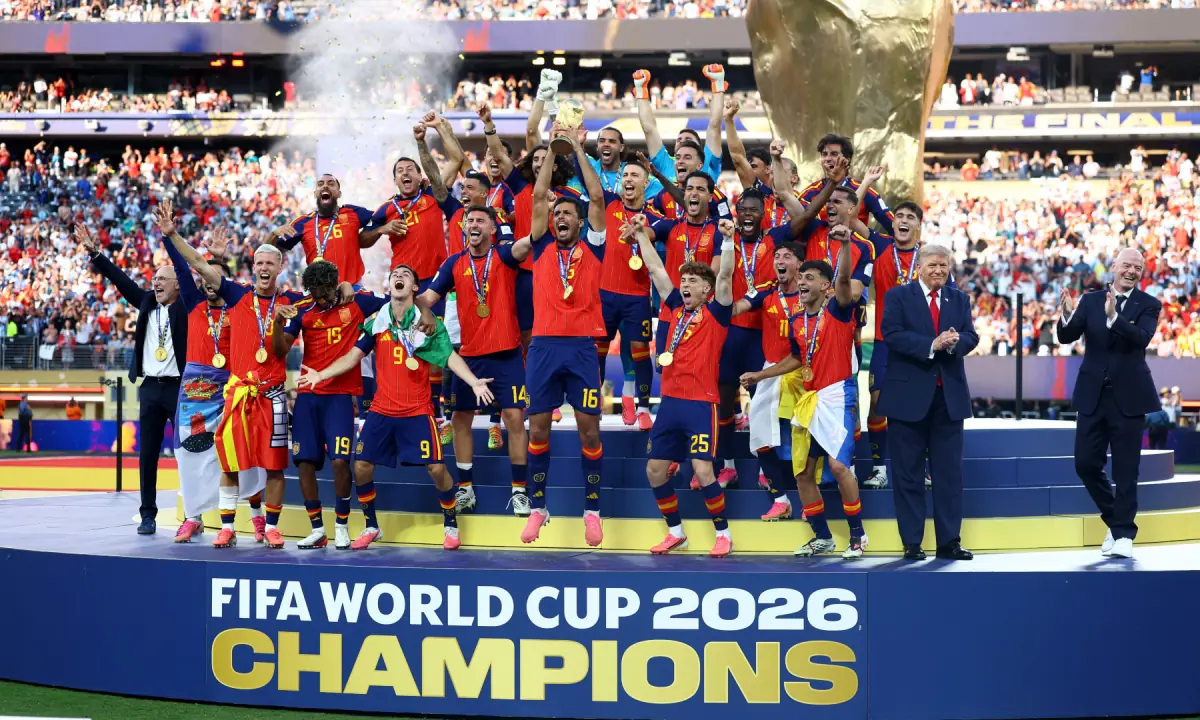
Spain won the World Cup final in New Jersey by a narrow scoreline, but the performance told a much wider story. A 1-0 victory after extra time over Argentina gave Luis de la Fuente’s side their second world title, yet the match was defined less by the solitary goal than by Spain’s long stretches of control.
For much of the contest at the New York/New Jersey Stadium in East Rutherford, Spain dictated the pace and shape of the game. They moved the ball with purpose, pressed quickly after losing it and repeatedly shifted Argentina’s defence from side to side. The result was a final in which the defending champions, who had relied throughout the tournament on resilience and late recoveries, were forced into long spells of chasing possession.
Spain’s midfield was central to that dominance. Rodri provided calm and authority, while Pedri and Fabián Ruiz added movement and technical quality. Argentina’s midfield, led by Enzo Fernández, struggled to settle into the match, and the frustration grew as Spain kept control. Fernández was eventually sent off after a second yellow card, adding to Argentina’s problems.
Argentina, with Lionel Messi and Lautaro Martínez up front, rarely found the kind of transitions that had powered their run to the title in 2022. Their attack was repeatedly isolated, and Spain’s back line dealt with the few threats that did emerge. Even the early injuries that disrupted Argentina’s defensive stability could not fully explain how thoroughly they were second best.
The decisive moment came in the 106th minute, when Ferran Torres, introduced from the bench, finished a move that Spain had been threatening to produce for most of the evening. It was Spain’s first goal in a World Cup final since Andrés Iniesta’s winner in 2010, and it matched the flow of the match, rewarding a team that had been the more organised and composed throughout.
Argentina tried to force a response in the closing stages, even with 10 men, but they generated little more than half-chances. Messi, who was appearing in a record third World Cup final and was widely viewed as playing his farewell tournament, could not alter the outcome. There was no late twist, no individual rescue act and no repeat of the kind of comeback that had carried Argentina through earlier rounds.
The victory also highlighted a shift in international football’s balance. Spain’s latest title was built on a style that recalled their past success but was adapted to a more dynamic generation. This team combined technical skill with intensity, with younger players such as Lamine Yamal helping define the new era. In contrast, Messi’s World Cup story appeared to end on a disappointing note for Argentina.
The report is based on a monitored public feed and is attributed to Dawn Sport. Source: Dawn Sport - https://www.dawn.com/news/2016825/how-spain-made-argentina-look-ordinary